Cantilever racking storage systems are flexible setups that can be fully customized according to the requirements of the warehouse or the industry as a whole. Depending on where it will be installed, total load capacity, relocation method, and the usage environment, there’s a cantilever racking type that’s suitable for the task.
This article will focus on the typical cantilever racking setups used in warehouses worldwide, including their main characteristics, advantages, and applicable scenarios. We’ll also discuss key points that will help warehouse managers and operators determine which setup will match their industry needs best.
How Are Cantilever Racking Systems Classified?
Let’s begin the deep dive by looking into the common classification methods for cantilever racking storage systems. Aside from the standard configurations, mixing and matching different categories of cantilever racking setups is done in real-world projects to address specific industry or warehousing requirements.
Some of these dimensions include:
Single-sided vs. Double-sided:
This refers to the sides where the cantilever arms are installed on the setup, dictating the load capacity and accessibility of goods. Arms can be placed on either side or both sides of the racking system
Light-duty vs. Heavy-duty
The weight capacity of the storage system depends on the product that will be stored on it. Light-duty racking setups work for PVC pipes or small products, while heavy steel pipes and large timber require a heavy-duty setup.
Fixed vs. Mobile
Accessibility and space density are main determiners on whether to use a fixed or mobile cantilever racking system. Fixed variants focus more on high-frequency accessibility, whereas mobile setups maximize space density.
Indoor vs. Outdoor
Another point of consideration is where the cantilever racks will be placed. Setups that will be used outdoors must be manufactured to accommodate corrosion and moisture resistance, while indoor systems should factor in warehouse layout and floor condition.
Structural Configuration
Aside from these basic systems, they can also be customized according to business needs. From modifying arm length and rack heights to including roof or canopy options, cantilever racking systems are flexible enough to accommodate these changes.
Single-Sided Cantilever Racking
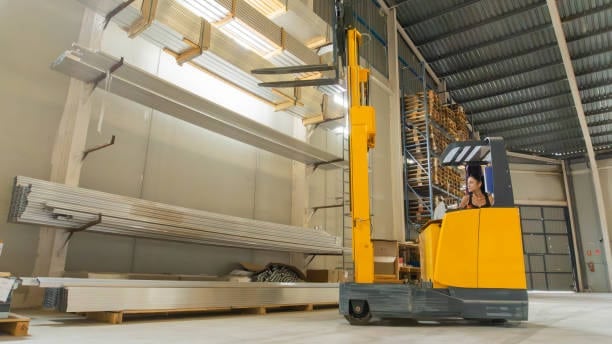
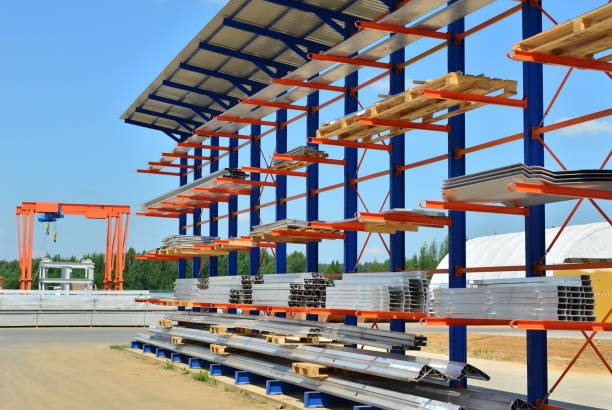
Prioritizing simplicity and functionality, single-sided cantilever racking systems are some of the more commonly seen in warehouses worldwide. These systems have the cantilever arms installed on one side of the rack, with the other side leaning against the wall or building structure. The result is a racking system that allows goods to be stored and retrieved from only one side.
Source: iStock
Single-sided cantilever racking systems can be seen on perimeter areas within the warehouse and in locations with limited floor space. The setup is also ideal for facilities that store and move long materials like timber, pipes, and metal bars.
Advantages of Single-Sided Cantilever Racking
Key advantages of utilizing single-sided cantilever racking systems include the efficient use of wall space, turning it into additional storage racks to carry more product. And as goods can easily be accessed from one side of the rack, there’s no need to secure specialized equipment for storage or retrieval. Additionally, these setups have a simple configuration, reducing operation downtimes and making them ideal for seasonal product storage.
Best Applications for Single-Sided Cantilever Racking
Single-sided cantilever racking systems are preferred for warehouses that handle large volumes of long, frequently accessed goods like timber, aluminum profiles, and steel or PVC pipes. Various construction materials can also be placed on these setups for fast and hassle-free product movement.
Double-Sided Cantilever Racking
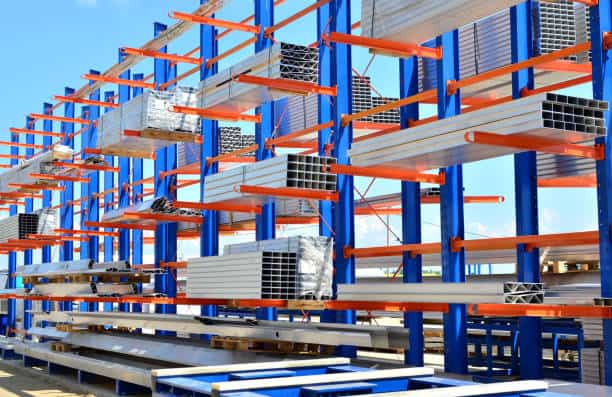
Compared to single-sided cantilever racking, double-sided cantilever racks feature cantilever arms installed on both sides of the upright frames. In this setup, goods can be stored and retrieved from both directions while ensuring balanced support from both ends.
These systems are typically installed in facilities with no wall restrictions, like the center of warehouse aisles or wide warehouses. They are also ideal for warehouses that handle heavy items with irregular or long shapes, like raw wood or specialized goods.
Source: iStock
Advantages of Double-Sided Cantilever Racking
With double-sided cantilever racking installed in warehouses, storage capacity within the facility is significantly doubled without adding another unit. Additionally, goods can be stored and retrieved from both sides of the racking setup, making the process easier and faster for warehouse operators. Moreover, the system’s design maximizes the central space of the warehouse, utilizing the middle area for efficient flow of goods and improving operational efficiency.
When Should You Choose Double-Sided Racking?
Double-sided cantilever racking systems work best when it meets ideal warehouse conditions. Here are some parameters to check before opting for this racking setup:
- Warehouse layout – specifically, you have to identify the available space of the warehouse. Double-sided racking works for facilities with large spaces or minimal wall restrictions, so tight spaces will limit the functionality of this setup.
- Material volume – next, know the specific dimensions of the goods that will be stored on the racks. Due to the design of this setup, they are typically used for carrying long, heavy materials with irregular shapes.
- Forklift traffic – since goods can be accessed from both sides of the cantilever racks, the forklifts must be able to move between the aisles to store and retrieve them. As such, there should be enough room for forklifts to freely navigate the aisles with minimal trouble.
- Required storage capacity – double-sided cantilever racks have double the storage capacity compared to the single-sided variety.
Light-Duty Cantilever Racking
Next, let’s look at light-duty cantilever racking systems, which are open-faced setups designed to handle lightweight, long, and narrow products. Unlike other racks that are suited for forklift operations, light-duty racks are designed primarily for manual product handling. These racks can be seen in retail back warehouses, production workshops, and warehouses handling small-scale long materials.
Your typical light-duty cantilever racking system will have smaller structural sections, which aid in the proper handling of the materials. The cantilever arms are also fully flexible, allowing the rack to quickly adapt to the shape or quantity of the materials the rack will handle. And due to the design and configuration of the setup, it usually has an overall lower load capacity compared to other systems.
Common products that are stored on light-duty cantilever racks include:
- PVC pipes
- Small metal profiles
- Furniture components
- Lightweight timber
Medium-Duty Cantilever Racking
Situated between the light-duty and heavy-duty systems, medium-duty cantilever racking systems provide the perks of both while mitigating their downsides. When mechanical assistance and forklifts are needed to move the goods around but do not meet the requirements of heavy-duty racks, that’s where medium-duty racks work best.
These racks are typically single-sided, with horizontal arms extending over the columns that give forklifts fast and easy access to the products. Each arm can be repositioned and adjusted to meet loading requirements and can carry up to 800 kilos per arm.
Medium-duty cantilever racks are ideal for warehouses that handle the following materials:
- Medium-weight pipes
- Timber
- Metal profiles
- Industrial components
Not sure of the type of cantilever racking system your warehouse needs based on load range? Provide the experts at iWarehousing with the products and load you’re handling, and our team can confirm which setup would work best for your needs.
Heavy-Duty Cantilever Racking
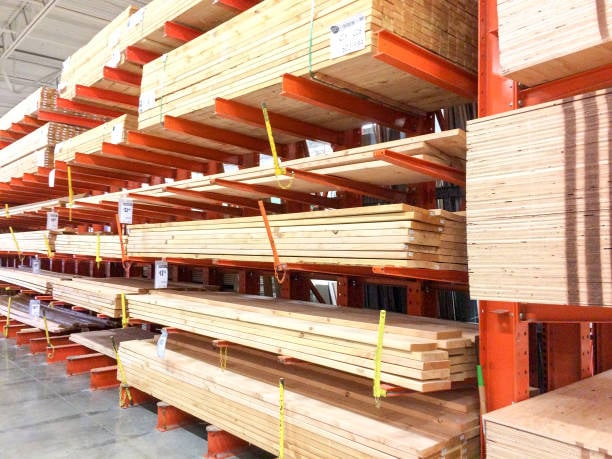
On the higher end of the durability and load-bearing spectrum are heavy-duty cantilever racking systems. Although this setup’s design has similarities to light- and medium-duty racks, the heavy-duty variety is specifically designed to handle greater weight. Additionally, heavy-duty racks require dedicated engineering based on cargo weight, length, center of gravity, and loading or unloading methods.
Part of the rack’s design is modified horizontal arms that can be moved up and down the central column to match the intended load. These arms, along with the columns and reinforced base, are also fabricated from strong structural steel for better load-bearing capacity. Plus, since there are no vertical columns in front of the racks, it’s easier for forklifts to store and retrieve product from the shelves.
Source: iStock
Heavy-duty cantilever racking systems are the preferred racking option for warehouses handling the following products:
- Heavy steel pipes
- Wood
- Steel bars
- Structural sections
- Large timber
- Heavy industrial materials
Mobile Cantilever Racking Systems
Although typical cantilever racks provide much-needed storage space, the arms are usually fixed and require significant space for installation and use. Mobile cantilever racking systems, on the other hand, offer high storage density while reducing aisle requirements.
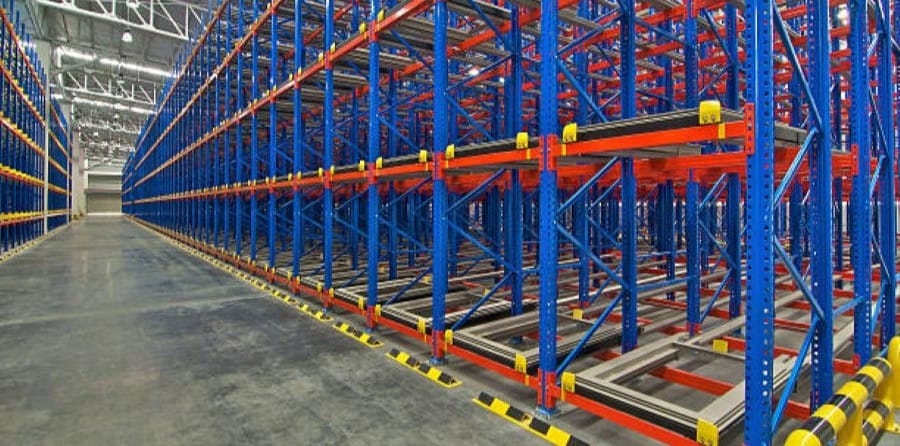
In this setup, the shelves are mounted on mobile bases or rail systems, with the aisles opening when needed. This maximizes the available space in warehouses, increasing warehouse storage capacity by up to 80%.
When Is Mobile Cantilever Racking Suitable?
Mobile cantilever racking systems are the go-to storage solution for warehouses that have limited floor area or those located in expensive locations. These setups also work for storing high-density long materials, as well as making access to lower-frequency materials easier.
Keep in mind, however, that there are some points to consider before committing to a mobile cantilever racking system. These would include:
- Higher initial investment – compared to other cantilever racks, mobile cantilever racks cost more due to the additional configuration and installation required.
- Floor and rail requirements – more than the floor area, warehouse operators should also consider how the rails will be installed on the facility. This may mean additional expense on making the flooring smooth and stable to accommodate the rails.
- Mechanical system maintenance – alongside the installation costs, the setup will need constant maintenance to ensure proper operation. With more moving parts, everything must be in working order to avoid delays or loss of profit.
Fixed Cantilever Racking Systems
Considered the traditional type of cantilever rack, the fixed cantilever racking system is what you’ll see in most warehouses. Simple yet reliable, this setup is permanently anchored to the facility’s floor, ensuring it can properly handle the weight of any product. Fixed cantilever racks also have a low system complexity, making them ideal for quick expansions or temporary installations.
One key difference between fixed cantilever racking and mobile cantilever racking is the demand each system addresses. Fixed racks are the go-to solution for high-frequency access and when conventional racks are needed, while mobile racks prioritize space density above all else.
Indoor vs. Outdoor Cantilever Racking
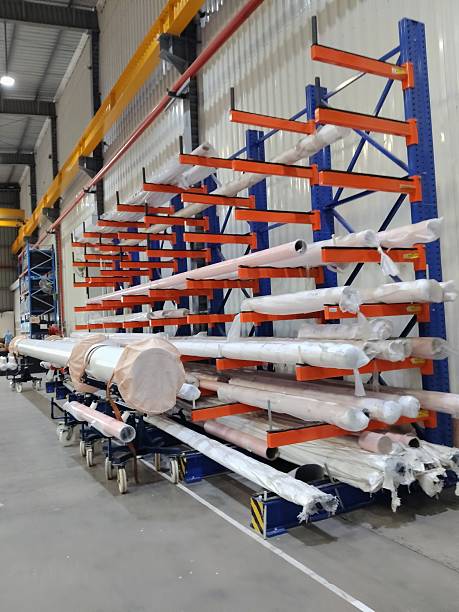
While cantilever racks can be used for material storage on both indoor and outdoor setups, specific modifications are required for maximized utility and extended service life. Here are some factors to consider when opting for an indoor or outdoor cantilever racking system.
Source: iStock
Indoor Cantilever Racking
Key points for indoor cantilever racks include the following:
Warehouse layout – the warehouse must have enough room to accommodate the racks upon installation. Proper spacing between the racks should be observed to ensure goods can be placed on them.
- Forklift access – along with giving space for the racks, there should also be sufficient room for forklifts to move and access the materials stored on shelves.
- Floor condition – another point to look at is the condition of the warehouse floor, specifically its evenness and stability. Since the racks will be installed directly on the floor, it should be able to handle the weight without breaking or cracking.
- Storage height – the height of the packages must be added to the computation, as the racks must have enough space to store them safely. This includes considering the ceiling height as well to maximize the vertical space without hindering the sprinklers or warehouse lighting.
Outdoor Cantilever Racking
Before going with outdoor cantilever racks, look into the following conditions:
- Corrosion resistance – outdoor installations risk exposure to the elements, particularly rain and moisture, which could lead to rust and corrosion that can damage the racks. Adding a galvanized or powder-coated finish on the cantilever racks will prevent the moisture from staying on the metal bars, delaying the corrosion process.
- Wind loads – locations with strong winds must consider how wind pressure can affect the load capacity and durability of the outdoor cantilever racks. To prevent long-term damage, the frames and cantilever arms must have additional support beams that will strengthen their structure.
- Outdoor anchoring requirements – anchoring the cantilever racks outdoors requires a different setup and process compared to indoor installations. Make sure that you can secure the proper accessories needed to install the racks securely without risking structural integrity.
Custom Cantilever Racking Configurations
Purchasing cantilever racking systems should not be based mainly on the setup’s type, but rather on the actual warehouse or industry storage needs. Thus, each cantilever rack configuration can be modified to address specified demands.
Some modifications include:
- Different arm lengths – dictate the length of each cantilever arm to suit the quantity or width of the intended cargo.
- Adjustable arm spacing – holes where the cantilever arms are placed can be adjusted to accommodate the height of the goods upon placement.
- Different rack heights – cantilever racks can be made as high or as low as required to maximize the warehouse’s vertical space.
- Customized load capacities – additional braces or support beams could be installed on the upright frames and arms to support more weight.
- Roof or canopy options – important for outdoor installations, roofs and canopies could be added to the setup to protect the cargo from rain and the elements.
- Special material supports – depending on the type of product stored, accessories and supports can be included in the setup.
Comparison of Different Types of Cantilever Racking
With several options to choose from, it can be a challenge to select the right cantilever racking setup for your warehouse. To make the process easier, we’ve prepared a comparison table that outlines the main strengths of each type of cantilever rack.
| Single-Sided | Double-Sided | Light-Duty | Heavy-Duty | Mobile | Fixed | |
| Load Capacity | Low to high, depending on how the rack is designed | Variable, based on cantilever rack design | Low to medium | High to very high | Relies on the system for overall load capacity | Can handle any weight capacity |
| Storage Density | Medium | High | Medium | High | Highest among all types | Medium |
| Accessibility | Full access from any single side | Provides full access from both sides | Fully accessible | Ideal for heavy loads | Selective accessibility | Great |
| Typical Products | Lumber, PVC or steel pipes, panels, and other long materials | Lumber, steel bars, pipes, other long goods | PVC pipes, small boards, lightweight profiles, furniture parts | Heavy Steel bars, timber, metal pipes, construction materials | Long goods, pipes, steel, lumber, bulky materials | Wide range of long or bulky materials |
| Space Requirement | Medium, can be placed against warehouse walls | Requires access to both aisles | Standard | May require more space for larger setups | Minimal use of floor area | Requires permanent access to floor aisles |
| Relative Investment | Low investment | Slightly higher than single-sided | Minimal | High, additional load may require extra cost | Highest cost due to additional moving parts and installation | Price based on the rack’s load capacity |
Additionally, here’s a quick reference based on what’s best for a given situation:
- For a standard solution to warehouse storage needs, go with a fixed cantilever racking system.
- For limited spaces, opt for mobile cantilever racking systems.
- For moderate storage capacity at a low cost, choose light-duty cantilever racking setups.
- For handling heavy materials, rely on the durability of heavy-duty cantilever racks.
- For storage that maximizes wall space, single-sided cantilever racks fit well.
- For maximum access to both aisles, double-sided cantilever racking is preferred.
How to Choose the Right Type of Cantilever Racking
Now that we’ve outlined the basic features of each type of cantilever racking, let’s discuss one of the most important points: what to consider when purchasing. Below are key points warehouse managers and operators must look into, along with some tips in making the right decisions.
If you’re unsure of the type your facility may need, tell your warehouse storage solution manufacturer of your requirements so they can narrow down your options. Manufacturers like iWarehousing have the expertise, industry understanding, and customization capabilities to turn your needs into functional cantilever racks.
Product Size and Weight
Begin with the dimensions of the product your warehouse is storing, specifically the length, width, and height of these products. This ensures that the goods can be securely placed on the racks and gaps in between are properly spaced out. The racks must be able to carry the goods properly, so also consider the load distribution to prevent overloading or damaging the racks.
Required Storage Capacity
Next, factor in the number of products and storage levels you’ll need to optimally design the cantilever racking system. This will help indicate the rack’s overall storage capacity, making sure each arm can handle the right number of goods. Additionally, you may want to look at the potential increase of inventory over time to future-proof your cantilever racks.
Warehouse Layout
Some considerations for the warehouse include the facility’s available floor space, column positions, ceiling height, and aisle width. These measurements will determine the dimensions of your custom cantilever racks, as well as the number of racks your facility will need. This will also indicate if a fixed or mobile cantilever racking setup would work more on your warehouse.
Loading and Handling Equipment
Another point to look at is the means by which your warehouse moves, stores, and retrieves product from the cantilever racks. Depending on whether the facility uses a forklift, side loader, crane, or manual handling, your custom cantilever racking system must match the equipment for maximum efficiency. Light-duty racks, for example, work best for manual handling, while single-sided racks are ideal for facilities that use forklifts.
Indoor or Outdoor Environment
Indoor cantilever racks have a different configuration from outdoor setups, with the outdoor configuration requiring more attention. This will include additional structure to handle heavy winds and specific surface treatment to prevent corrosion or harsh sunlight.
Frequently Asked Questions About Cantilever Racking Types
What Are the Main Types of Cantilever Racking?
Common cantilever racking types include:
- Single-sided – cantilever arms are located on one side of the frame, with the other side typically placed against the warehouse wall.
- Double-sided – situated in the middle of warehouses, this setup has the cantilever arms on both sides of the frame for full access to goods.
- Light-duty – designed to carry lightweight goods with long or irregular shapes.
- Medium-duty – similar to light-duty racks, but with a load capacity of up to 1500 kilograms.
- Heavy-duty – cantilever racking systems designed with additional support to carry more weight.
- Fixed – the typical cantilever racking setup that’s grounded on the warehouse floor, providing ample storage density and load capability.
- Mobile – cantilever arms are placed on rails or wheels that can be accessed by operators when needed.
- Indoor and outdoor systems – while the initial design may be the same, outdoor cantilever racks require specific support beams and finishes to handle the rain, heat, and wind.
What Is the Difference Between Single-Sided and Double-Sided Cantilever Racking?
There are three key differences between single-sided and double-sided setups, namely:
- Installation position – single-sided cantilever racks are typically situated against walls, while double-sided racks are better placed in between warehouse aisles.
- Storage capacity – single-sided setups provide ample storage space from one side of the frame. Double-sided racks, on the other hand, allow for product storage on both sides, essentially doubling the storage capacity.
- Accessibility – single-sided racks only need one side of the aisle for full product access. However, double-sided setups require extra space to allow forklifts to access both sides.
What Type of Cantilever Racking Is Best for Heavy Steel?
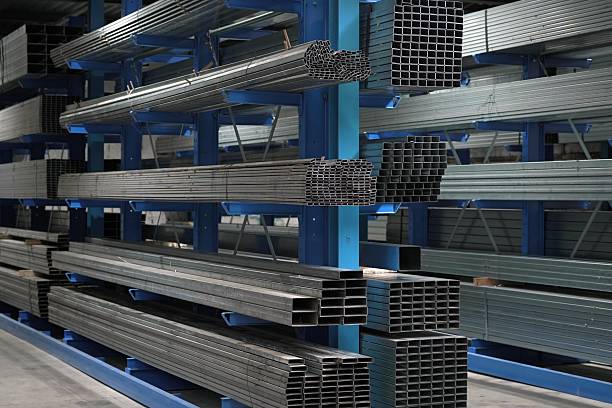
When storing heavy materials like steel pipes and structural steel, it’s best to use the heavy-duty cantilever racking system. Not only is it designed for carrying heavier loads, but the structure can also be modified to handle the weight and size of the products.
Source: iStock
Can Cantilever Racking Be Used Outdoors?
Yes, cantilever racking systems can be used in outdoor locations. However, some things need consideration and must be prepared for before installing the racks outdoors, like:
- Corrosion protection
- Wind loads
- Anchoring
- Weather exposure
Which Cantilever Racking Type Saves the Most Warehouse Space?
Mobile cantilever racking setups help maximize limited floor space by placing the racks on wheels and rails for an on-demand storage solution. And while this saves on the floor area, the setup requires additional investment for the equipment, installation, and frequent maintenance.
Can Different Cantilever Racking Types Be Customized?
Yes, cantilever racks can be fully modified to match the specific requirements of a warehouse or industry. Parts that can be customized include:
- Load capacity – the cantilever rack structure can be adjusted to accommodate specific weight limits.
- Arm length – the cantilever arms can be extended, so that loading wider or irregularly-shaped goods will be easier.
- Rack height – the overall height of cantilever racks must be adequate enough to handle maximum load and can be moved depending on product need.
- Product dimensions – along with rack height, the overall dimensions of the cantilever racking system can be modified based on warehouse measurements.
Finding the Right Cantilever Racking System for Your Warehouse
In this article, we discovered that cantilever racking storage systems are not a standard setup, but rather a range of systems that provide a flexible solution to warehouse storage needs. While there’s no single type that fits all warehouse requirements, it’s easy to identify which setup will work best according to product demand. Remember that when choosing a cantilever racking setup, it’s important to consider the product characteristics, load requirements, available warehouse space, and the equipment used for handling the goods.
If you’re looking for a manufacturer for your next cantilever racking system, don’t hesitate to contact the experts at iWarehousing! With more than a decade of production experience, we can design, assemble, and commission a custom cantilever racking setup based on your warehouse layout and storage requirements. Book a free consultation today!