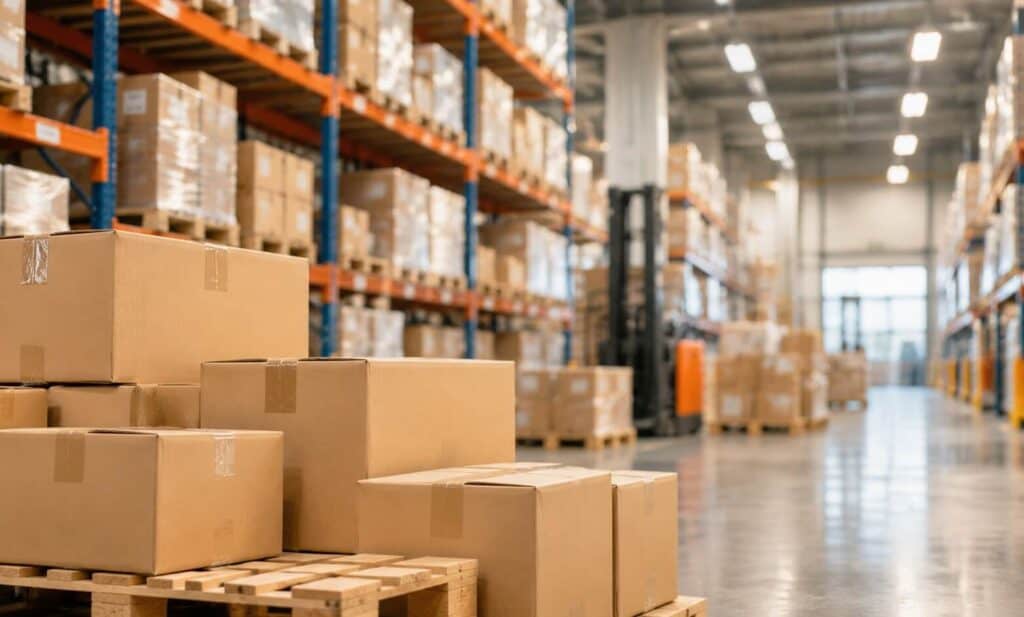
The fast-paced nature of the e-commerce industry demands modern warehouse systems that manage rapid deployment of goods at any given time. Fulfillment centers catering to e-commerce businesses typically handle a large number of SKUs, process orders at a high frequency, and manage seasonal inventory changes, leading to rapid inventory turnovers. With the right equipment, facilities can elevate overall performance and reduce operating costs while supporting potential business operations.
To properly optimize e-commerce warehouses, we’ll discuss the importance of procuring pallet racking systems for e-commerce fulfillment centers that can fully utilize the facility’s storage space and improve picking efficiency. We’ll also look into how to properly choose the shelving that will match your business requirements.
Understanding the Storage Challenges of E-commerce Fulfillment Centers
Before talking to manufacturers and placing an order for pallet racking systems, it’s best to start by taking note of what storage concerns your warehouse needs addressing. Whether you’re operating a traditional or an e-commerce warehouse, identifying the storage requirements for your facility will make the sourcing process more efficient and cost-effective.
Managing High SKU Variety and Inventory Complexity
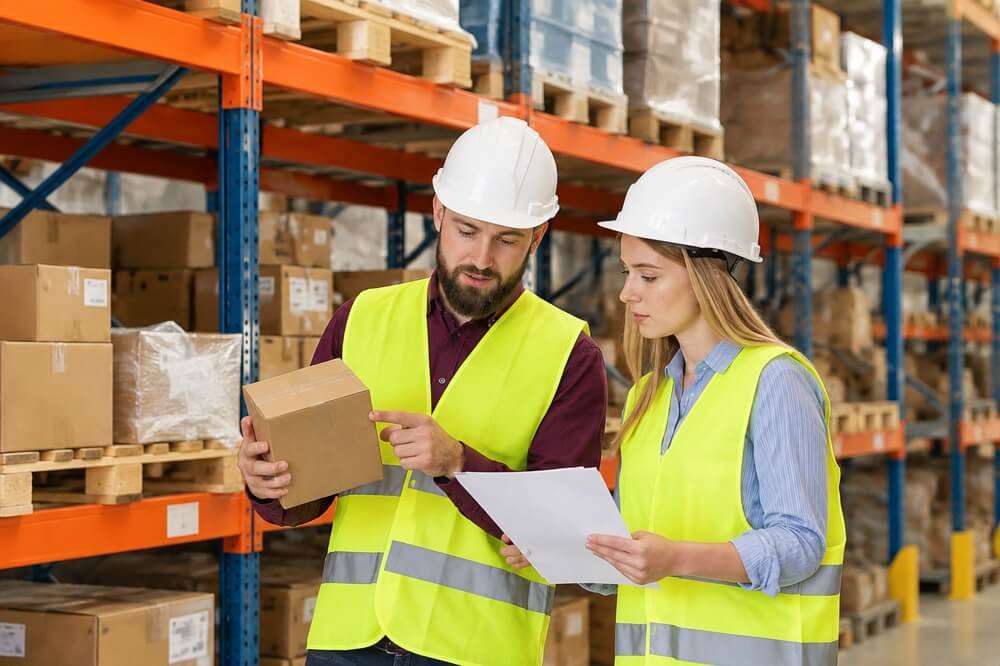
E-commerce warehouses typically store a large number of various SKUs at any given time to cater to the business’s diverse customer base. With an expansive and complex inventory, it’s easy to mix SKUs up, which can affect the warehouse’s operational efficiency.
Source: iStock
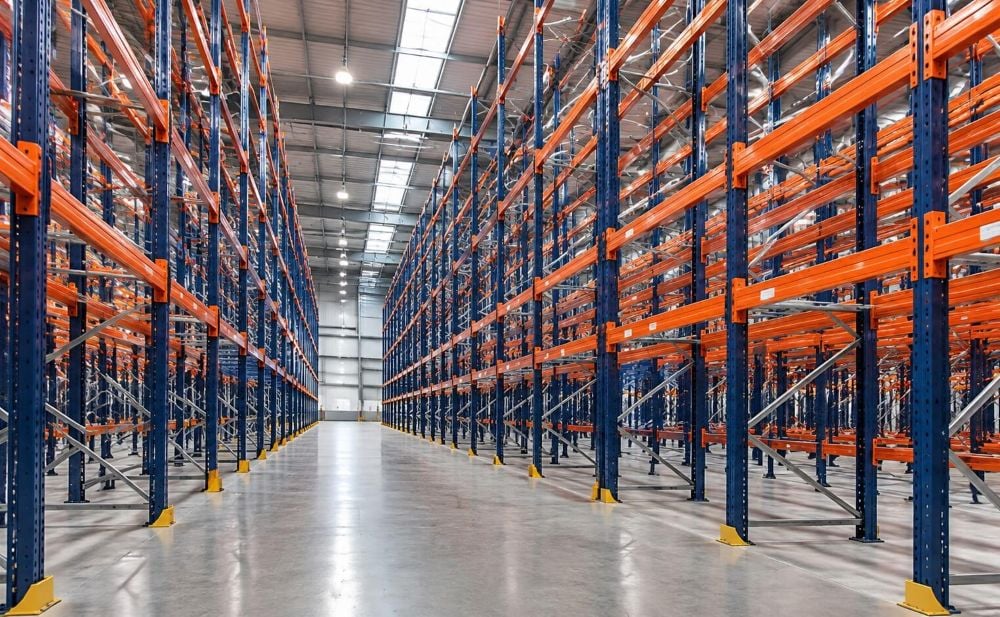
Storage solution systems like the selective pallet racking setup perfectly complement the need for highly flexible shelving. The system improves inventory management efficiency by allowing forklift operators to quickly store and locate pallets, while providing space for multiple SKUs. Plus, the simple design of selective pallet racks makes it easy to install and move for expansion projects.
Improving Picking Efficiency for High-volume Orders
Dealing with the rapid outbound demand associated with e-commerce is another task warehouses must efficiently accommodate. Alongside carrying multiple SKUs, warehouses for e-commerce businesses are also in charge of picking the products for high-frequency orders and preparing them for shipping. This also applies to small batch picking, where specific personnel fulfill the orders by picking the items from pallets by hand.
With the appropriate pallet racking system, coupled with the right layout, operational congestion can be drastically reduced for better turnaround times. Proper shelving provides enough room for personnel to move and pick items from the pallets, making the process faster, smoother, and more productive.
Handling Seasonal Inventory Fluctuations
Inventory volume and variety constantly change for e-commerce warehouses, especially during promotional seasons and holidays, where certain products are expected to have a higher demand. As such, it’s important to include inventory fluctuations in the equation when selecting a pallet racking setup for the warehouse.
The ideal shelving for facilities that handle seasonal products for e-commerce brands must strike the right balance between easy configuration, flexible storage capacity, and expandability. Since product volume fluctuates based on demand, it’s best for the shelving to be easily assembled and disassembled according to inventory needs. Additionally, the pallet racks should seamlessly work with the existing setup, so as not to disrupt the flow of inventory upon expansion.
Choosing the Right Pallet Racking System for E-commerce Warehouses
With major challenges that e-commerce warehouses face out of the way, let’s look at the pallet racking systems that solve these industry demands. We’ll highlight various shelving systems and indicate the scenarios where the setup works best, streamlining your sourcing process.
Source: iStock
Selective Pallet Racking for Maximum Accessibility
When it comes to managing multiple SKUs and easy inventory management, selective pallet racking systems are what your warehouse needs. The shelving’s simple yet effective design allows warehouse personnel to store and retrieve numerous SKUs on each tray, facilitating high-frequency and unhindered access to products. This translates to 100% pallet selectivity, significantly improving order fulfillment quality and speed that can bring more business to warehouses and e-commerce brands.
Moreover, selective pallet racks lend themselves well to facilities that require a flexible warehouse layout solution. Since pallets are easily accessible, they can be easily arranged according to market demand or inventory quantity. Hot-ticket pallets can be moved to a more favorable location, while low-demand pallets can be moved to higher trays to maximize pallet flow.
Pallet Flow Racking for FIFO Inventory Management
For facilities that want to increase storage density while optimizing the flow of product within the facility, it’s best to select pallet flow racking systems. The setup utilizes inclined roller tracks to automatically move pallets from the loading side to the picking side, improving warehouse storage capacity by converting aisles into additional cargo space. Tracks also include speed controllers and stoppers, ensuring the pallets travel safely across the setup, elevating inventory turnover efficiency.
Another advantage of pallet flow racks is their adherence to First-In, First-Out (FIFO) inventory management flow, where the first pallet stored is the first to leave the rack. This setup facilitates fast turnover of goods, which works well for warehouses handling high-volume products and items with expiration dates, like food and beverages and pharmaceuticals.
Multi-Tier Racking and Mezzanine Systems for Vertical Space Utilization
Facilities with empty vertical height can maximize the available space into additional storage space through multi-tier racking and mezzanine systems. Although they vary in configuration, these setups are designed with a single goal: increase the facility’s extra space by up to 300% while reducing processing times by half.
Multi-Tier Racking System – ideal for creating more inventory space or for manual picking, this setup adds storage tiers that are connected by stairs or walkways. The additional racks are built directly to the framework of existing racks, requiring less work and cost to implement.
Mezzanine System – independent platforms provide the warehouse with multiple floors that can be used in various ways. Aside from being extra space for storage, they can also be utilized as office space or as workstations for assembly or picking.
Automated Storage Solutions for Large Fulfillment Centers
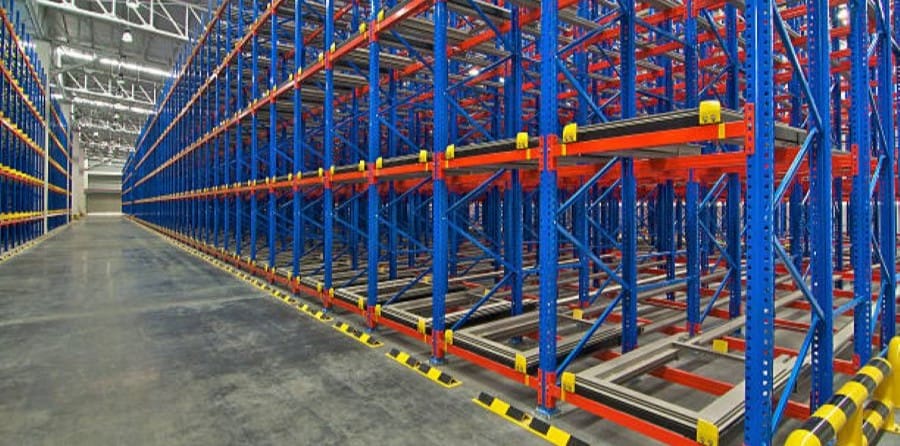
Large warehouses tend to handle larger volumes of orders at certain intervals, requiring a faster and more reliable way to complete requests. One of the best and most efficient means of storage management is solutions that integrate technology and automation like pallet shuttle systems. These configurations utilize battery-powered semi-automated ramps to store and retrieve pallets from the dense storage racks for faster and safer order fulfillment.
Automated pallet racking systems provide a two-fold solution to warehouse needs: increasing storage density and improving operational efficiency. The setup has the shuttles move the pallets to and from the racks, turning the aisles into additional space where pallets can be stored. This also keeps pallet contact with forklifts to a minimum, reducing the risk of damage or operational delays.
Optimizing Warehouse Layout and Rack Placement
Buying pallet racking systems by themselves does not guarantee an efficient and optimized e-commerce warehouse. It also takes a level of preparation and careful planning to make the most of your new shelving solutions in order to maximize their capabilities. This section will focus on ways to elevate the performance of your facility.
Analyze Warehouse Workflow Before Rack Design
Warehouses are not just locations where inventory is stored and kept safe. For e-commerce brands, a warehouse is also responsible for the smooth and seamless movement of product from receiving to shipping. Identifying bottlenecks and knowing how pallet racks can smooth the workflow is key to making the most of your sourcing process.
The following needs to be considered when designing a custom pallet rack:
- Receiving area – depending on how your warehouse receives the pallets, you may need some shelves for either quality control or repalletizing.
- Storage area – different pallet racking systems are widely used in this section, mainly based on the required tasks or space requirements. Multi-tier and mezzanine provide more room for storage, while selective racking makes management of multiple SKUs more efficient.
- Picking area – as the area where product is picked for order fulfillment, access to pallets is more important here than anywhere else. For facilities handling high volumes of picking, selective racking and multi-tier racking setups work best for the task.
- Packing area – mezzanine systems are the preferred solution for warehouses that require a dedicated packing space, as it gives enough room for multiple workstations for efficient packing.
- Shipping area – the final part of the process typically does not require much shelving, as pallets are usually unloaded directly to the cargo ships. However, some selective pallet racks may work as storage space in the event of delays.
Balance Storage Density and Aisle Accessibility
Obtaining the happy middle between storage density and access to aisles can be a challenge for many warehouse operators. On one end, you want to make the most out of the facility’s available space to store more pallets. On the other, you want to give enough space for forklifts and personnel to move safely within the storage racks for operational efficiency.
To achieve a good balance between these two factors, consider the following:
- Channel width – relies heavily on the aisle classification the facility is using, ranging from the conventional wide aisle at 3.5 to 4.3 meters to very narrow aisles at 1.5 to 1.8 meters. The space ensures forklifts can move freely without clashing or hitting the racks.
- Forklift type – the type of forklift operated within the facility may dictate how tall and deep the pallet racks can be. Standard forklifts have the lowest reach, while articulated forklifts can reach higher trays.
- Storage density – the deeper the storage capacity is, the narrower the aisle in between will be. Some configurations, like shuttle pallet racking and drive-in racking, forego aisles altogether to increase storage density.
Organize Inventory Based on Product Demand
An important factor in designing a custom pallet racking system is identifying the product demand will ensure your shelving complements the warehouse’s turnover process. The best method to use for this will be the ABC Inventory Analysis, a principle which states that 20% of your products will constitute 80% of warehouse activity.
- High-demand products – typically between 10% and 20% of the warehouse’s total SKU count, these are the fastest-moving pallets in your facility. They are best placed as low as possible, near the packing and shipping areas for seamless movement.
- Medium-moving products – constitute 20% to 30% of the SKUs in the warehouse; these are movers but not as high of a demand. They are best placed on higher levels, where they can be accessed but not hinder the top movers.
- Low-demand products – roughly 50% to 70% of the SKUs in the warehouse move 5% to 10% of the time. It’s ideal to place these pallets at the highest level of the racks, making sure they are available when needed.
Create Flexible Storage Zones
Flexible storage zones are designated spaces that allow warehouses to transition between SKUs, seasonal pallets, and facility expansion without halting operations. When designing the warehouse layout, make sure to allot a space for flexible storage based on the following considerations:
- Fast-moving inventory zone – dedicated for high-volume pallets for daily transactions, this space should be placed between receiving lanes and shipping docks for linear cross-docking flow.
- Bulk storage zone – typically acting as a depository for inventory, this is where medium to slow-moving items are placed to replace fast-moving items. Columns for this space must be evenly spaced to prevent forklift collisions.
- Seasonal inventory zone – while vacant during off-peak periods, this space can be fully packed when the peak season for the inventory comes. The variability of seasonal inventory means that the space should be flexible for other uses during off-season.
- Returns processing zone – usually designed for handling product returns, the space will need dedicated spaces for unpacking, testing, repacking, inspection, and removal.
Improving Picking Efficiency Through Rack Configuration
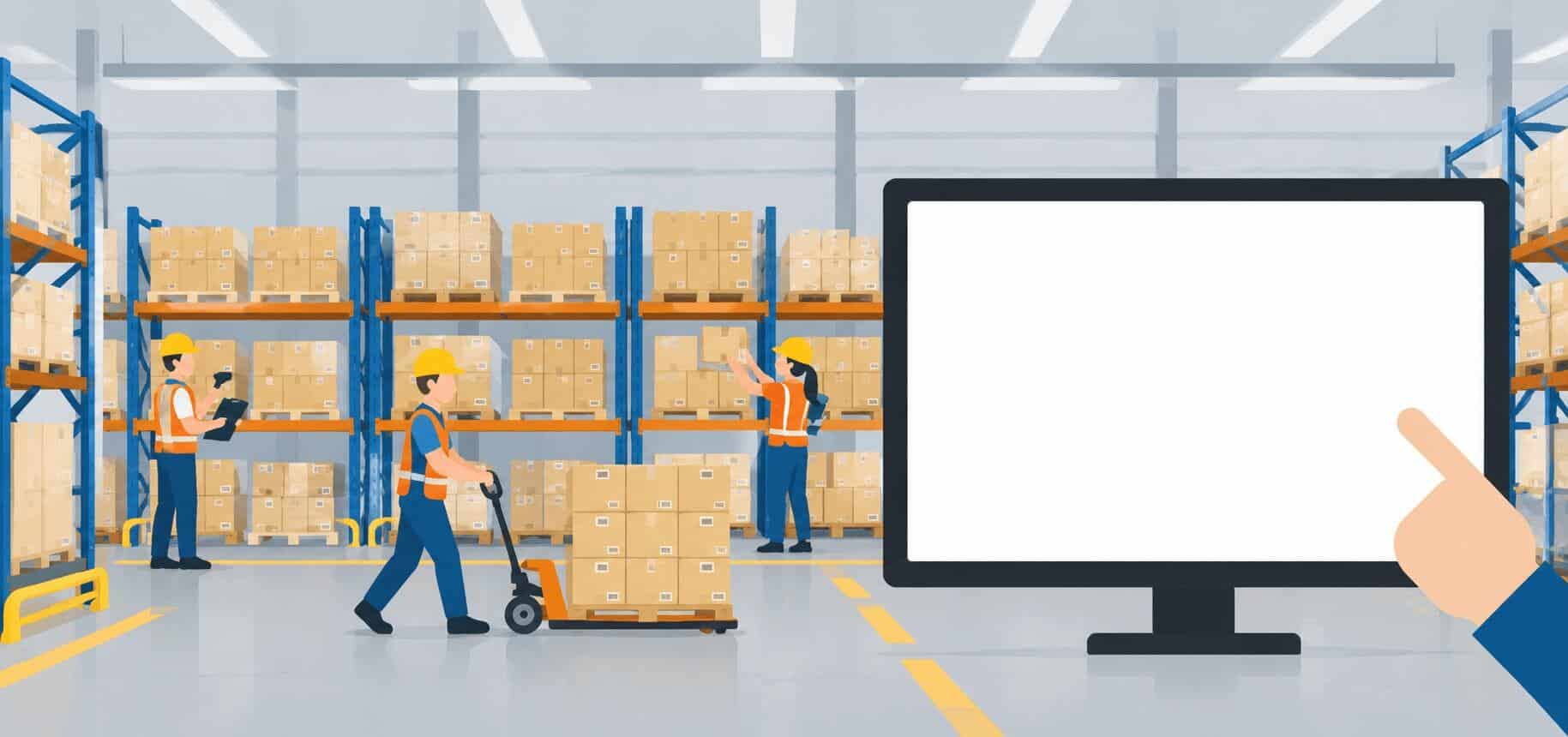
Pallet racking systems are not only for storing and retrieving pallets, but they can also facilitate product picking, which is crucial for e-commerce businesses. Here are some tips to make sure your pallet racks will elevate your warehouse’s picking capability and reduce turnover times.
Source: iStock
Reduce Travel Distance for Warehouse Workers
Begin by strategically placing the pallet racks carrying high-demand items in proximity to workstations assigned for order fulfillment via product picking. Items that are typically ordered together must be stored beside each other to reduce processing time while keeping accuracy high.
Pallets should be within reach of the personnel, with picking routes properly optimized for efficient completion. Additionally, the routes for personnel must not interfere with those for forklifts to prevent any operational delays.
Combine Pallet Racking with Other Storage Systems
Pallet racking systems can be combined with other types of storage solutions to further address the various production needs of the warehouse. These can be done through several configurations, like:
- For the highest SKU count, pallet racking + shelving – ideal for storing and managing multiple SKUs, this setup is configured to accommodate as many SKUs while making handpicking easier. The tray at the lowest level is replaced with multiple picking shelves, while replacements will be placed on the higher levels. The configuration caters to high-SKU inventory warehouses and those fulfilling orders for small parts, automotive parts, and retail clothing.
- For strict FIFO implementation, pallet racking + carton flow rack – introducing roller tracks into the pallet racking configuration’s lowest section makes loading and packaging easier and faster. This setup works specifically in a FIFO inventory method, with the replenishment zone from the picking zone that guarantees smooth product flow. This works best for moving Category A items, perishable products, and warehouses focused on high-volume order fulfillment.
- For product consolidation, pallet racking + picking stations – by transforming the lowest part of the pallet rack into central workstations, pickers from different stations can bring items into the central hub for fast and accurate order completion. The setup is ideal for warehouses handling assemblies for subscription boxes, various kits, and intensive order consolidation for e-commerce brands.
Improve Inventory Accuracy with Better Organization
While quick order fulfillment is important, facilities must also guarantee accuracy with every completed package to prevent delays or returns. To maintain high accuracy within the e-commerce warehouse, it’s vital to label every rack with the pertinent SKU information, making detection easier. It would also be efficient to include barcode systems for pickers to quickly identify individual products.
For larger facilities, it would be more efficient to implement warehouse management systems that can make the storing and retrieval process faster and more precise. These can be programmed to handle several tasks at one time, improving efficiency and order fulfillment rates.
Safety Considerations for E-commerce Pallet Racking Systems
Along with speed and accuracy, safety should be a primary concern when operating an e-commerce warehouse. Facilities that maintain a safe working environment ensure the well-being of personnel, quality of the pallets, and minimal operational delay, resulting in better output and profits.
Proper Load Capacity Design
Pallet racks are intended to carry heavy loads for long periods; thus, they should be designed and configured properly to prevent bending or falling while in use. This starts by computing the pallet weight and using it as the base for deciding which materials or measurements to use when building the racks.
The beam capacity for each row of the setup must be at least equal to the total pallet weight to avoid overloading the beams. Additionally, strategic rack configuration can give the pallet rack more durability and stability for extended load bearing.
Safety Accessories and Rack Protection
Next, keep your pallets safe while extending the service life of your pallet racks by installing specifically designed accessories and protective gear.
- Upright protectors – attached directly or in front of the upright columns, these accessories made from metal or high-grade plastic absorb the shock from forklifts colliding on the racks.
- Column guards – working similarly to upright protectors, these are typically made from thicker materials and installed on the floor of the frames for additional shock absorption.
- Safety barriers – intended to restrict entry from certain zones and segregate vehicles from personnel, safety barriers are fences or rails embedded on the warehouse floor.
Regular Inspection and Maintenance
To maintain the constant operation of your pallet racking systems, designated personnel should conduct periodic inspections and safety checks. These inspections follow a specific checklist, looking at different aspects of the racks, making sure they meet industry benchmarks. Any defects or deformities must be addressed immediately to prevent further damage or equipment breakdown.
When damage is identified on the pallet rack, whether from the routine inspection or while in use, it must be fixed as soon as possible. When necessary, the section may be closed off to avoid potential problems on the pallets, facility, or personnel.
Common Mistakes When Optimizing E-commerce Warehouse Racking
Focusing Only on Storage Density
While it can be tempting to focus the pallet rack design on raising the warehouse’s storage density, doing so will compromise the facility’s overall efficiency. The same goes for focusing on making the pallets accessible, which significantly limits the storage space of your facility.
Striking the perfect balance between storage capacity and accessibility must be achieved to maximize your warehouse’s capabilities. This also makes product picking easier, resulting in a faster turnover that benefits e-commerce warehouses the most.
Ignoring Future Business Growth
Purchasing pallet racks without considering potential expansion or including seasonal products to the equation may lead to missing out on profit in the future. E-commerce brands add new products to their shops frequently, meaning their warehouses must be ready to accommodate increased inventory anytime. This is also true for seasonal inventory, which requires extra warehouse space for a limited time.
To prevent missed profits or extended operation downtimes due to expansion, it’s recommended to factor in these details during the sourcing process. Always choose pallet racking setups that can quickly adapt to warehouse changes, so the shift from traditional inventory to seasonal products will be easier and faster.
Selecting a Rack System Without Professional Design Support
Choosing the right pallet racking system for your warehouse works better if you can secure professional design support to make any modifications. Having a professional by your side can guarantee that the setup is not only properly calibrated to your needs but can also be strategically placed in the warehouse for optimal performance. Plus, it makes customization easier, since you’re talking to experts who know what your demands are.
How to Choose a Pallet Racking Supplier for E-commerce Fulfillment Centers
Following the previous section, we’ve seen how crucial it is to work with an industry professional for designing and manufacturing your pallet racking systems. In this section, we’ll look at the factors that make up a reliable pallet racking system maker and why iWarehousing is one of them.
Experience with E-commerce Warehouse Projects
The first thing you should look at when selecting a pallet racking manufacturer is their experience in the industry. Note that length in service does not determine experience, rather how long they have been working with specific industries or similar clients. The more time they’ve spent working with e-commerce brands, the more they can be trusted with your project.
As a longstanding maker of pallet racking systems, iWarehousing has worked with numerous e-commerce brands over the years. This gives our team a unique insight into what your warehouses need to improve storage density and product flow while making pallets more accessible for picking.
Engineering and Custom Design Capability
Next, take time to check how the manufacturer designs and makes their pallet racks, paying close attention to their engineering capabilities. They should be able to provide CAD drawings of the pallet racks, including proper calculations to guarantee they can carry the pallets well. Additionally, having the capability to create a layout design that maximizes your warehouse’s space can close the deal.
When it comes to superior engineering and expert pallet rack design, iWarehousing comes second to none. Not only do we excel in creating custom pallet racks, but we also tailor them for maximum load management for extended periods. Plus, you can check our case studies to see how we addressed various concerns for e-commerce warehouses.
Manufacturing Quality and After-sales Support
Another factor to look at is the quality of the pallet racks the manufacturer delivers. Their design may be top-notch, but without the right quality, the racks will not perform according to expectations. Additionally, providing you with assistance after product shipments separates a good pallet rack maker from an excellent one.
Working with iWarehousing means you’re getting the reliable pallet racking systems manufactured from the best materials, ensuring your expectations are the benchmark. Our comprehensive production facility allows us to produce the pallet racks from the ground up in-house for consistent quality. Not only that, but you can also rely on our team to provide complete installation support and commissioning before you use them, so you’re sure they function as promised.
Elevating E-Commerce Warehouse Performance with Optimized Pallet Racks
Pallet racks for e-commerce warehouses do more than just provide storage space for pallets; they are also responsible for improving the flow of product across the facility. As such, sourcing proper pallet racking systems require comprehensive consideration, like storage requirements, inventory characteristics, packing efficiency, and future facility expansion. Following the right path in selecting the racking setup for your business can help develop better efficiency and flexibility, boosting the performance of your e-commerce fulfillment center.
Make your sourcing process easier and faster by working with a manufacturer that knows what your business needs, like iWarehousing. Book a free consultation today to see how we can optimize your e-commerce warehouse with custom pallet racking setups.