Despite looking simple and straightforward, most pallet racking systems are composed of several components that form into a reliable storage management solution. Some components are non-negotiable, while others are selected based on the warehouse condition or intended use.
In this article, we will break down the components seen in a typical pallet racking system. We will also point out which accessories work best in specific warehouse or application situations.
The Primary Structural Components
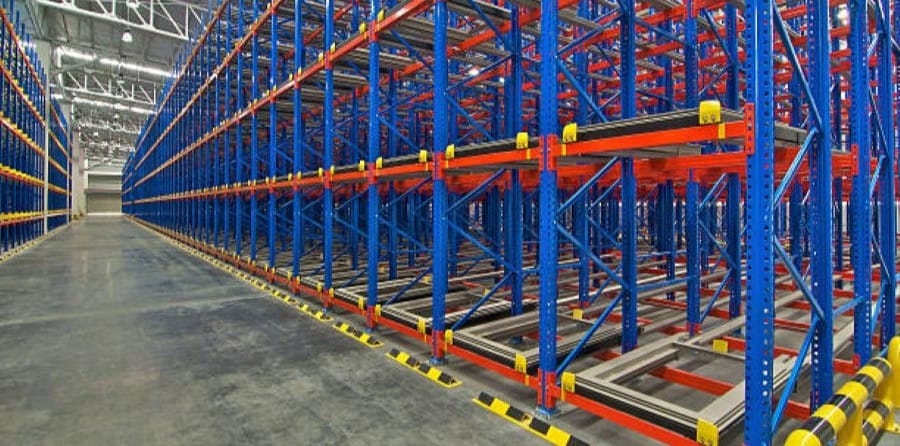
Every pallet rack, from simple selective pallet racking systems to the more complex drive-in racking counterparts, consists of a combination of upright frames and horizontal beams. Acting as the basic frame of the shelving, it determines the structure’s overall load-bearing capacity and must have enough durability to handle heavy loads.
Upright Frames
Columns/Posts
These long steel columns or posts are the structural cornerstone of the pallet rack, providing the stability needed that allows the shelving to stand firmly while carrying heavy loads. Usually formed in pairs, they are typically made from one of two processes: roll-formed racking or structural racking.
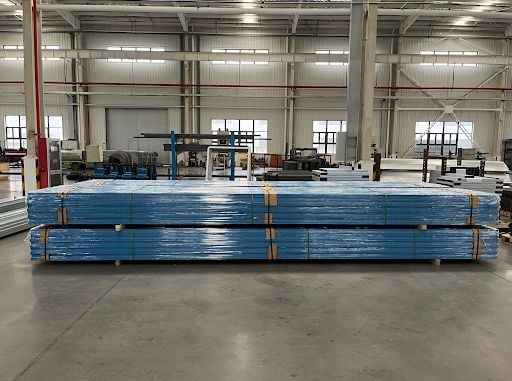
Roll-formed racking – manufactured from cold-rolled sheet metal connected using boltless teardrops, the columns can handle up to 8,900 pounds or 4,000 kilos a pair. They are relatively more affordable to produce and are relatively easy to adjust once configured.
Structural racking – formed by hot-rolling heavy steel, structural racking frames are generally thicker and can hold up to 12,000 pounds or roughly 5,400 kilos of weight. These frames require heavy-duty bolts to connect, thus making adjustments after assembly more complicated and more expensive to produce.
Bracing
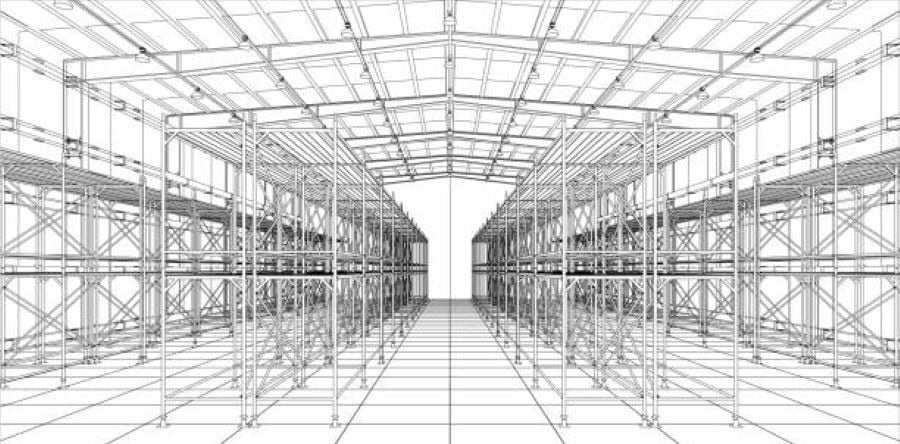
Also known as lacing, these are the horizontal and diagonal steel bars used to connect the columns, forming a lattice pattern. This provides the necessary rigidity to the structure that keeps the columns upright and prevents them from twisting as it carries the load.
Footplates/Baseplates
Plates of flat steel are found at the base of each column,, that aids in spreading the weight the structure carries across the floor space. The size and thickness of these baseplates depend on where the structure will be installed, with seismic-prone areas requiring thicker plates for additional stability. Some may also feature holes to insert anchors in, which are used to hold the structure in place.
Beams
Step Beams vs. Box Beams
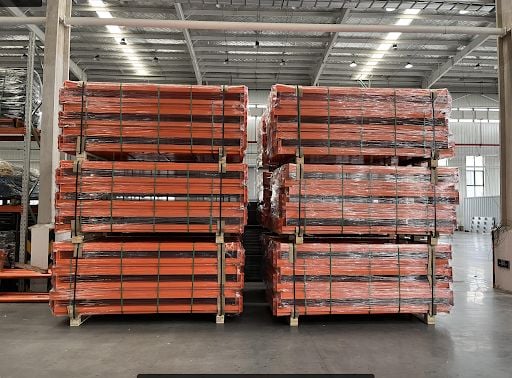
The other critical piece of a pallet rack, aside from the uprights, is the beams that form the actual shelves that carry the pallets. Common beam types used in manufacturing pallet racks include step beams and box beams; each is designed for a specific purpose.
Step beams – commonly used in most pallet racking systems, these roll-formed pieces are popular for their versatility and capability to handle non-standard products securely. They have an “L-shaped” ledge along the upper portion of the edge, usually called “the step,” intended to hold accessories and clips flush on the beam for a flat surface.
Box beams – on the other end of the spectrum are box beams – closed, rectangular beams that offer higher load capability and better rigidity with greater resistance to twisting. Due to their specific design, they require specialized wire decking and U-shaped safety bars to connect the beams to the uprights. These beams work best for facilities with higher load requirements or areas exposed to more seismic activity.
Connectors
Found at each side of the beam, these endplates have hooks and rivets that help connect the beams to the slots on the upright frames. These pieces are responsible for securing the beams and uprights together, forming a singular solid structure.
Safety Clips/Pins
Made from small pieces of steel, they are connected to the beams to prevent accidental removal from the uprights due to forklift contact.
Support & Decking Options
Once the structural pieces are in place, it’s time to lay out the various support and decking pieces to help the pallet rack handle diverse load types. They are also critical components to the entire pallet racking system, as they ensure the setup complies with global safety standards and fire prevention practices.
Wire Decking
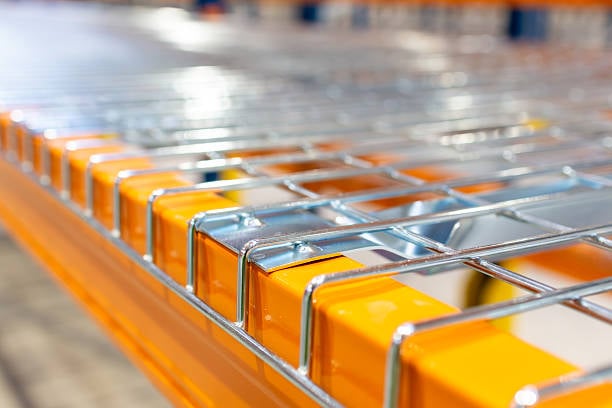
Considered as an industry standard, rarely will one see a complete pallet racking system without a form of wire mesh decking installed. Known for its open grid design, wire decking pieces are critical to helping beams carry the pallet’s load while allowing water to flow over the gaps for fire extinguishing.
Source: iStock
Wire mesh decking comes in various styles, including
- Waterfall decking – the preferred style for most pallet racking setups, it features a lip overhanging the deck’s edge that looks like a waterfall. The lip wraps over the beam, keeping the decking secure and preventing it from sliding over when in use.
- In-step decking – instead of overhanging from the beams, this wire mesh decking variation fits snugly inside the step beam’s ledges. This creates a completely flush surface for the pallets, preventing potential snagging or obstructions during the loading process.
- Flared or universal decking – a more flexible and versatile wire mesh deck configuration, this is specifically designed with flared-out support channels that fit any beam style. This piece achieves a smart balance between ease of use and practical functionality.
Alternative Decking
Depending on the type of cargo the pallet rack will hold, wire mesh decking may not be the best option. Cases like these will require the use of alternative materials, which may include:
- Solid steel – more compact and denser than wire mesh decking, they are best suited for handling heavy pallets with legs or small contact points that will slip through the mesh.
- Wood or timber – a viable option for lighter loads and lower-budget setups. However, they are prone to catching fire and may restrict the efficiency of fire sprinklers.
- Bar grating – when handling heavy machinery parts, metal coils, or extremely dense items, it’s best to use decking made from bar grating.
- Punched steel – made from flat metal panels with holes punched into them, this works well for racks that hand-stack small items, which would typically fall through the mesh.
Pallet Support Bars
Also called crossbars, these small steel bars provide additional structural support intended for smaller or weaker pallets. A pair of crossbars is typically installed perpendicular to the front and back beams, preventing the pallets from falling through the rack while evenly spreading the load. They could either be clipped on step beams without the use of welding tools or wrap over box beams and held in place with several screws.
Stability Hardware
For warehouse pallet racking systems to properly handle the load it carries, they must have enough stability and a solid base to stand on. This is where stability hardware comes in – simple yet invaluable components that secure the structure and add rigidity for better load capacity.
Anchor Bolts
Considered as the definitive component for stabilizing pallet racking systems, anchor bolts are used to fix the structure’s base to the concrete flooring. As a standard rule, each footplate requires at least one anchor holding it in place, though seismic-prone areas may need two or more anchors attached.
Typical setups utilize wedge anchors to secure the pallet rack, which expands as the nut tightens to bite into the concrete. For high-vibration locations, it’s better to use heavy-duty screws that are inserted into pre-drilled holes to stabilize the structure.
Shims
Not all warehouses have flat floor areas, and setting up pallet racking systems on uneven ground may lead to the pallets falling or the structure tipping over time. Sliding in thin steel plates called shims or lever plates under the footplate before anchoring easily prevents this from happening. The plate essentially fills the gap and makes the pallet rack perfectly flat.
Row Spacers
Certain warehouse pallet racking setups require the structures to stand back-to-back from each other, which could tip the other racks when they become unstable. To provide stability for two rows of shelving, row spacers are attached between the upright frames. This creates a wider, more stable structure with a consistent gap of 6 to 12 inches between pallets that also allows heat and sprinklers to pass through.
Wall Ties
Single-row pallet racking systems placed against a wall need to be properly secured to prevent tipping, especially when the rack is six times taller than its depth. This is done by anchoring the shelving to the wall using wall ties, steel connectors that add stability to the structure.
Safety Guards & Protection Accessories
Sourcing a pallet racking system is a significant investment, and businesses want to make the most of this investment as much as possible. Safety and protection accessories not only limit potential damage to the pallet racking setup but also drastically extend its service life. This guarantees a better return on investment while reducing expenses for costly repairs or replacements.
Post Protectors
Pallet racking systems come into contact with forklifts constantly, which could cause collisions that could damage the structure over time. Post protectors help minimize the damage resulting from forklift collisions by taking the brunt of the impact instead of the pallet rack’s frame.
Post protectors are available in two main varieties: the floor-mounted and frame-mounted types.
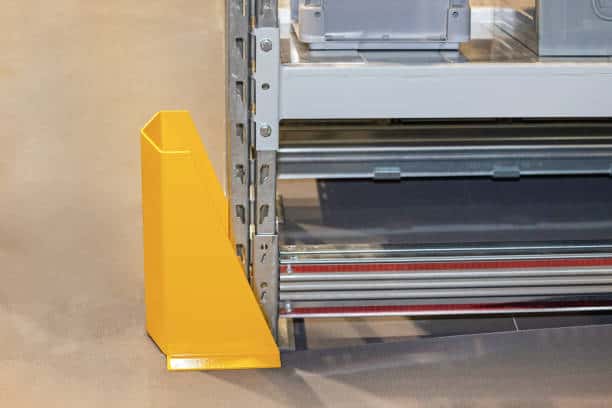
- Floor-mounted protectors are shield-like attachments bolted to the warehouse floor and in front of the upright frame to absorb the impact from forklift collisions.
- Frame-mounted protectors, on the other hand, are plastic or steel pieces connected directly to the frames that deflect minor bumps and collisions.
Aisle-End Protectors
Due to high traffic and sharp angle turns that forklifts must manage, aisle ends are considered high-risk zones and prone to collisions. To prevent damage in this area, durable physical barriers can be installed on shelf ends and aisle corners. Some may even opt for steel end-of-row guards or bullnoses that wrap around the entire end frame for better protection.
Source: iStock
Anti-Collapse Mesh
Pallets and other loose items may fall on the back of pallet racks, leading to making the pallets harder to reach or potentially damaging the product. By installing anti-collapse mesh at the back of the pallet rack, goods will stay in place and won’t fall into the back.
An option for anti-collapse mesh includes safety nettings made from flexible nylon, which is ideal for lighter products or loose items. For heavier pallets, the other option will be the wire mesh back panels, which are permanent fixtures made from rigid steel.
Pallet Back Stops
Gaps exist between pallet racks, which are typically intended to allow air to pass through for proper circulation and fire safety. However, pallets may protrude excessively when pushed, causing them to obstruct or tip on the gaps. Steel beams or brackets called pallet backstops can be installed at the back of pallet racks, preventing the pallets from moving backward beyond the allowed space.
Signage and Compliance Labeling
Labels and signs are not only vital for operators to know where to place the pallets, but also provide critical information on the rack’s load capacity. Failure to provide the necessary details in a clear and easily detectable manner can cause loading issues, be it from mixing up the SKUs or overloading the pallet racks. Governing bodies like OSHA and RMI have strict requirements that warehouse operators must comply with regarding proper signage and labeling.
Load Capacity Plaques
Load Application and Racking Configuration (LARC) or Load Capacity Plaques are mandatory signage intended to notify forklift operators of allowable limits per rack. Per RMI/ANSI MH 16.1, every pallet racking setup must display signage showing specific details per row, including:
- Total load capacity per pallet position and per bay, along with the total weight limit for all levels.
- A configuration display or drawing that shows how pallets must be spaced per beam. Any changes to the beam require an update on the plaque as well.
- Manufacturer details, including the manufacturer’s name and when the pallet racking system was installed.
Location Labels
Like GPS coordinates for the warehouse, these are barcodes or RFID tags used in conjunction with WMS systems, focusing on speed and accuracy. Location labels have a string of numbers and letters called a coordinate system, broken into Aisle, Bay, Level, and Position.
Let’s use the code 03-08-A-04 as the coordinate, for example.
- Aisle 03 will be the row where the pallet will be placed
- Bay 08 will be the section between the upright frames
- Level A is for the vertical shelf for the product, and
- Position 04 is the slot where this pallet should be stored.
Every Pallet Racking System Component Identified
There you have it, a complete run-down of every component that one will see in a pallet racking system. Each component is crucial for the overall performance and stability of the structure; it should be properly considered during the sourcing process.
Rely on the expertise of iWarehousing to meet your needs for custom warehouse management solutions. With decades of manufacturing experience and a deep understanding of the market, we know how to turn your ideas into practical and cost-effective pallet racking systems. Contact our team today so we can start working on your next project!