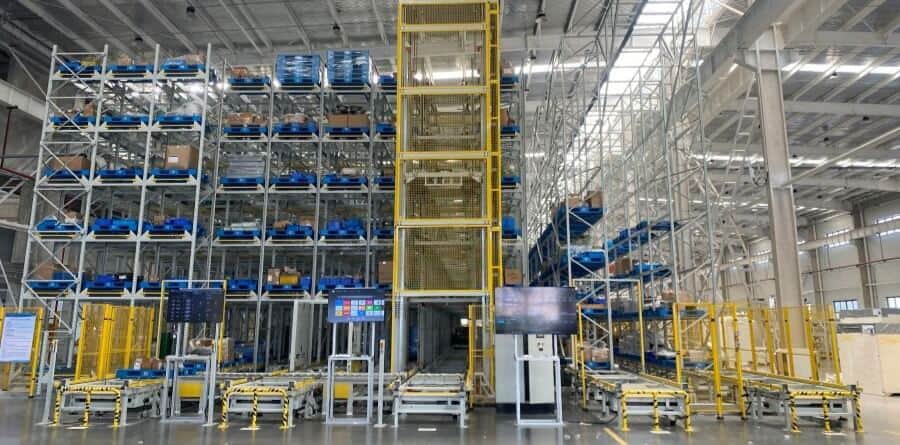
The warehouse racking industry is constantly evolving, with innovations to make processes faster and easier being introduced to the market regularly. One of which is the 4-way pallet shuttle, a system considered the evolution of the standard 2-way pallet shuttle.
In this article, we will discuss the specifics of 4-way pallet shuttles, including how it works and their core features. We’ll also compare the 4-way pallet shuttle against the standard 2-way shuttle to see their key differences.
What Is 4-Way Pallet Shuttle Meaning?
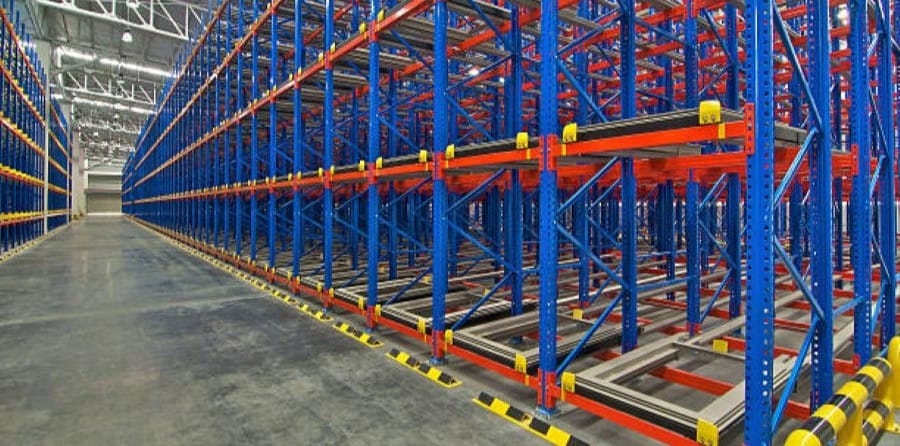
A 4-way pallet shuttle is an automated self-powered device that is primarily used to move and manage palletized products within a warehouse. Initially introduced during the early 2000s, it is usually seen alongside an automated storage and retrieval system (AS/RS) and is ideal for high-density storage facilities.
Why is it called “4-way”, you may ask. The term “4-way” refers to the directions where the device can move on a rack track: forward, backward, left, and right. This intuitive aisle switching is achieved through either a series of transverse rails at the bottom of the rack or by using a dedicated lift and transfer mechanism.
How Does 4-Way Pallet Shuttle Work?
Several individual systems work in sync to facilitate the operation of a typical 4-way pallet shuttle setup, each playing a critical role in making the system function smoothly. We’ve listed the specific systems required to create a reliable setup, which includes:
Dual Wheel Design
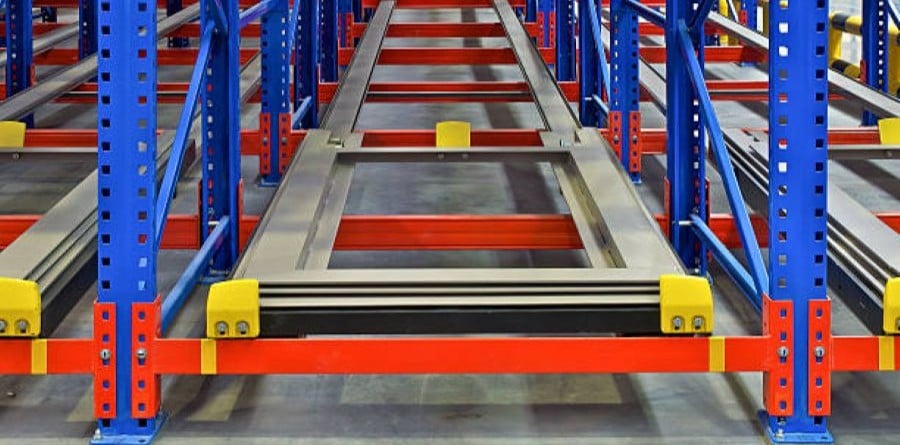
Each 4-way shuttle setup features two independent sets of wheels, one set moving horizontally while the other set moving vertically. To facilitate the movement of product along the aisles, the wheels automatically shift at the intersection of the rack tracks, leading the pallet to the intended direction without manual intervention.
Grid-Based Track System
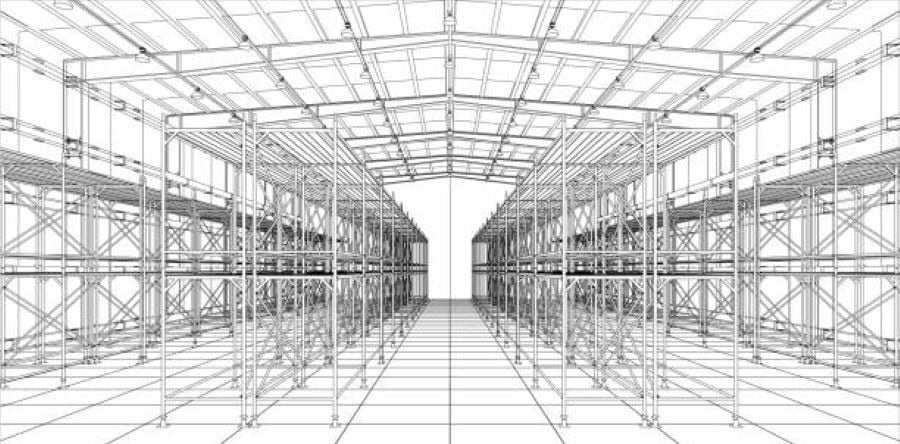
Grid-based track systems are physical foundations intended to help the pallet shuttle navigate through the pallet shuttle racking system. Made from multiple levels of intersecting steel rails, they turn the warehouse racking setup into a 3D highway that makes storage faster and more calculated.
Vertical Lifting System
Also referred to as the pallet lifter or vertical reciprocating conveyor, vertical lifting systems allow pallets to be placed on different levels instead of relying on singular layers. This system turns the setup into a three-dimensional storage solution, thus maximizing the available space in the warehouse.
Intelligent Dispatching System
Acting as the central network or the brain of the 4-way pallet shuttle setup, intelligent dispatching systems elevate warehouse racking from manual to fully automated. The Warehouse Control System (WCS) software is responsible for assigning various tasks, planning pallet routes, and monitoring traffic flow, along with scheduling when carts will be charged.
4-Way Shuttle System Operation Process
A typical 4-way shuttle system follows a specific flow in completing a task. The process goes as follows:
- WCS assigns a task
- The shuttle automatically moves to the target channel
- The shuttle enters the channel to store or retrieve a pallet
- Once complete, the shuttle returns to the transfer point
- After validating the task, a new one will be assigned on the channel.
4-Way vs. 2-Way (Traditional) Pallet Shuttle
In this section, we will focus more on the key aspects of 4-way and 2-way pallet shuttle setups. Identifying their differences will help you see how a 4-way shuttle setup can improve your warehouse operations.
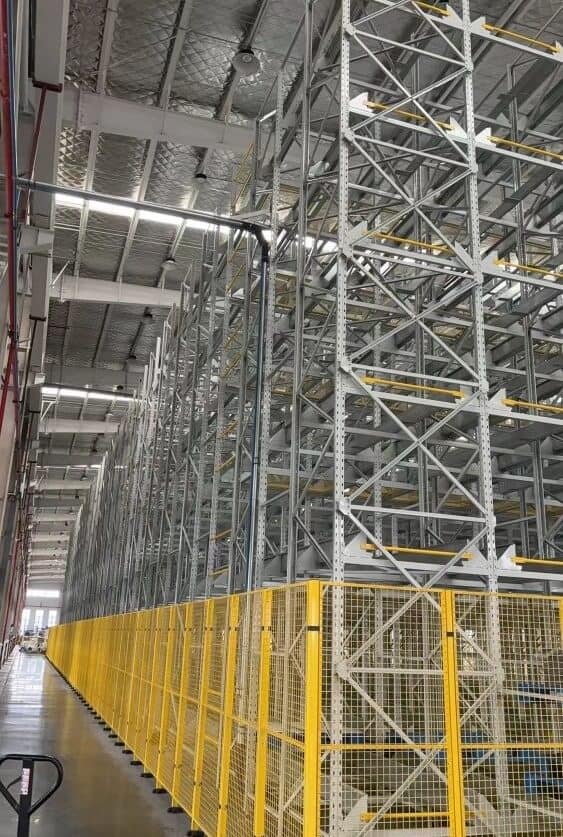
Here’s a glance at some differences between the two shuttle setup solutions:
| Dimension | Traditional 2-Way Shuttle | 4-Way Shuttle |
| Movement direction | Front and back (X-axis only) | Front and back (X-axis) and left and right (Y-axis) |
| Channel switching | Requires multiple devices | Can be switched independently |
| Equipment requirements | One unit per lane | One or two units are sufficient for the entire warehouse. |
| System flexibility | Low, limited functionality | High, easy to reconfigure |
| Automation level | Semi-automated racking | Fully automated solution with WCS software |
| Initial investment + ROI | Low initial cost, medium investment return | High initial cost and investment return |
| Manutenção | Low maintenance requirements | Medium, independent components may require periodic maintenance |
| Applicable warehouse size | Small and medium scale | medium to large scale |
For a more detailed explanation of key differences, we’ve highlighted several business-impacting functions and compared the two shuttle setups.
Racking Automation
2-Way Shuttle: Mainly a semi-automated racking setup that still relies on forklifts to facilitate most of the storage and retrieval processes. Operators are responsible for picking up and dropping off the shuttle, along with placing the pallets at and from locations.
4-Way Shuttle: As a fully automated racking solution, the intelligent dispatch system dictates how pallets will move across the system and where the pallets will be stored or retrieved from. This eliminates the need for forklifts and operators, thus reducing operational cost while improving efficiency.
Utilização do Espaço
2-Way Shuttle: This shuttle racking setup works best in warehouses that handle high volumes of product with similar SKUs. The lower SKU count makes it easier and more efficient for forklifts to fill aisles, along with faster product retrieval.
4-Way Shuttle: The flexibility of 4-way pallet shuttle racking setups addresses the needs of high-density warehouses carrying multiple SKUs. The multi-directional access this setup offers allows for better pallet sorting and retrieval while maximizing every space available.
Initial Investment and Returns
2-Way Shuttle: Thanks to the simpler equipment and setup requirements, 2-way pallet shuttles cost significantly less to source and implement. Even standard drive-in racking setups can be retrofitted to become 2-way shuttle systems with the addition of a simple WCS.
4-Way Shuttle: Due to requiring multiple complex systems, precision components, advanced WCS, and detailed installation, 4-way pallet shuttles have a higher upfront cost. However, returns are felt faster and larger over time, as it can replace several setups and can save on labor costs.
Core Features of 4-Way Pallet Shuttle
With differences between 4-way and 2-way pallet shuttles out of the way, it’s time to look at the main features that the 4-way can bring to warehouses. This section will enumerate several features and how they can elevate warehouse racking efficiency and performance.
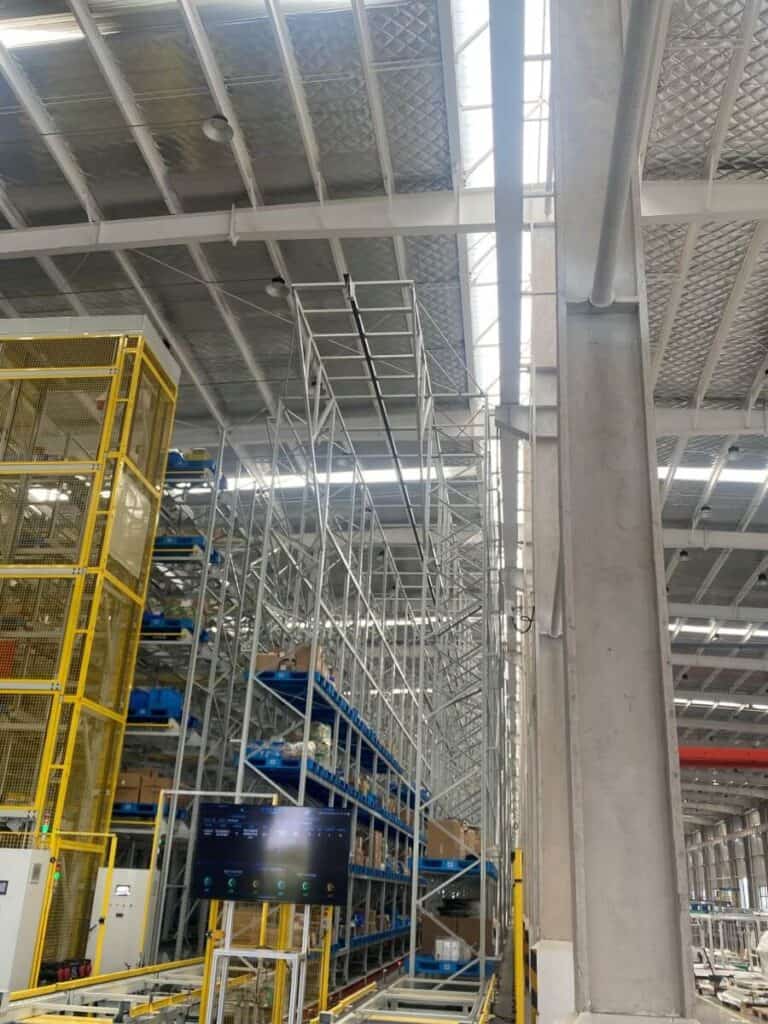
Maximum Equipment Utilization
With its capability to move pallets in four directions, a single 4-way pallet shuttle setup can cover the pallet sorting needs of an entire warehouse. This translates to faster project completion with no dead space between aisles and an extremely low idle rate.
High Density and Flexibility
Along with its fast pallet movement, 4-way pallet shuttles excel in maintaining dense storage spaces with the utmost efficiency. The setup also supports dynamic task scheduling, ensuring real-time assigning, sequencing, and updating of inventory with minimal human intervention.
High Scalability
Another perk of opting for a 4-way pallet shuttle is its high adaptability to warehouse conditions. Warehouse expansion only requires the addition of shelves to store more pallets and a quick reconfiguration of the shuttles.
Reduced Downtime
4-way pallet shuttle setups help minimize the impact of production downtimes, especially when multiple systems are installed in a warehouse. In the event that a certain setup fails to work, other setups can temporarily take charge to continue operations while repairs are being conducted.
Supports FIFO and LIFO
The flexibility of 4-way pallet shuttle setups allows for different inventory storage methods to be implemented within the same warehouse without interrupting operations. Warehouses can now use FIFO and LIFO methods simultaneously, expanding your processes and marketability.
Applications of Using 4-Way Pallet Shuttle Racking
See how 4-way pallet shuttle racking can improve warehouse operations in various industries and how they address certain gaps in these markets.
Cold Chain & Frozen Warehousing
Cold storage warehouses are already costly to operate and maintain, as these facilities require specific equipment that can handle low temperatures and potential hazards to personnel. This means that every cubic meter of the cold storage warehouse must be fully utilized for maximum profit.
4-way pallet shuttles are designed to operate smoothly in any environment, even in low-temperature conditions like those in cold storage facilities. Not only will 4-way shuttles vastly improve storage density and space utilization, but it also reduces the risk for personnel exposure in these potentially dangerous locations.
Food, Beverage & FMCG
The food and beverage market is one of the most sensitive industries worldwide, dealing with perishable and time-sensitive goods on a daily basis. Additionally, warehouses working on these markets require equipment that can properly handle FIFO sorting and seasonal product management.
With a 4-way pallet shuttle setup’s high-density storage and random-access capabilities, it can properly support rapid inventory turnover for seasonal and time-sensitive products. And with its modular design, the setup can easily adapt to the warehouse’s gradual expansion as the business grows.
E-Commerce & Retail Distribution
Warehouses catering to e-commerce and retail distribution markets manage a large volume of SKUs, thus requiring a sorting system that can handle quick product management. Moreover, as they deal with variable order demand and drastic throughput fluctuations during peak seasons, a setup with automated features will make order fulfillment faster and smoother.
Thanks to the multi-directional access and automated WCS software 4-way pallet shuttles use, it is ideal for storing multiple SKUs with speed and accuracy. Manual picking can also be done alongside the pallet shuttle automation, significantly improving the order processing efficiency of goods-to-person picking.
Pharmaceutical & Chemical
Another highly sensitive market for warehouse racking, the pharmaceutical and chemical industries require the strictest compliance management and batch tracking standards. Additionally, these pallets may require specific environments to preserve the quality and consistency of the products they contain.
With 4-way pallet shuttles, warehouses can maintain precise inventory location and comply with the systematic cargo tracking that the pharmaceutical and chemical industries need. They can also be used in specialized environments, reducing the need for dedicated equipment and exposing personnel to potential hazards.
Factory Warehouses & Production Buffer
Factory warehouses are typically used as storage for raw materials and buffering for finished products before shipment. They’re also critical facilities for Just-In-Time (JIT) production, where there’s no room for delays, clutter, or inventory mishaps.
The compact layout of 4-way pallet shuttles helps save valuable space in production workshops, ensuring the warehouse is fully maximized. Plus, the high throughput capacity of this setup keeps materials fed from storage to the production line promptly.
Irregular or Retrofitted Warehouses
Old factories and irregularly shaped facilities with traditional fixed passageways can be a challenge to update in order to keep up with modern warehousing requirements.
4-way pallet shuttles utilize a grid layout, which is easier and more practical to set up, even in older facilities. Retrofitting warehouses allows the use of every inch of the irregular space, improving utilization and overall functioning.
Trends: Why 4-Way Shuttles Are Gaining the Market
As of 2025, the global 4-way pallet shuttle market is estimated to be around $590 million, with a projected value of up to $1.05 billion by 2032. But what is propelling the rapid adoption of 4-way pallet shuttles across various industries worldwide? Some key indicators toward this trend include the following:
- The increasing cost of warehouse real estate forces companies to secure a way to maximize their limited space.
- Constant evolution of the e-commerce market created new demands for warehouses, like multiple SKUs, elevated turnover rates, and seasonal product demands.
- The rising cost of labor across all industries, along with the challenge of recruiting competent personnel, is leading to an increased demand for production automation.
- Adoption of scheduling algorithms through artificial intelligence in modern warehousing, including path optimization, task prediction, and autonomous learning of warehouse operations.
- A shift in manufacturing standards, where transposition mechanisms from different companies are starting to become more compatible with each other for better cohesion.
- Operation requirements have changed over time, from simply reducing the workforce to increasing production numbers.
- Increased demand for energy conservation and environmental protection initiatives, along with the implementation of new energy sources.
Evolving Warehouses Worldwide with 4-way Pallet Shuttles
4-way pallet shuttles are changing the way warehouses are handling storage racking and management. Through an automated system and access to all four cardinal directions, this pallet shuttle setup provides warehouses with better reach to storage spaces. Plus, it can reach higher or lower levels of the pallet racks, turning your warehouse into a three-dimensional storage area.
The features of 4-way pallet shuttles make them highly usable across various industries, addressing different market demands with speed and efficiency. And while the initial cost to procure the setup is higher than that of other setups, it offers a better and faster return on investment.
If you’re looking to upgrade your warehouse with a 4-way pallet shuttle, contact the experts at iWarehousing. We help you procure and set up a 4-way shuttle assembly based on your warehousing and industry needs. Talk to our team today for a free consultation.