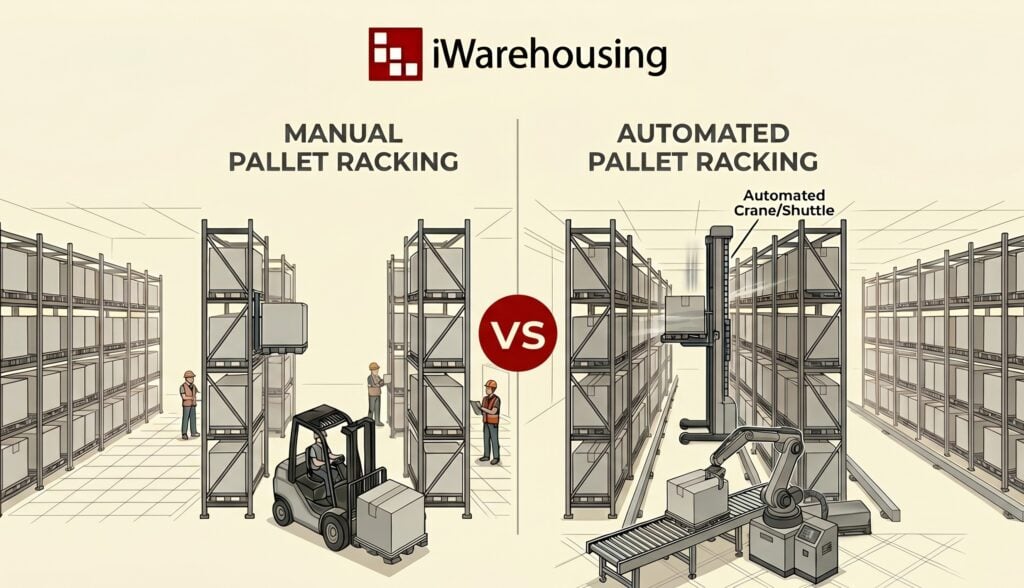
The warehousing industry typically faces the challenge of balancing rising labor costs and stricter delivery timelines to maintain profitable operations. Thus, businesses are at times forced to choose between the traditional efficiency of manual pallet racking or the technological empowerment of automated setups.
Manual racking focuses on combining heavy-duty forklifts and manual labor to move pallets around the warehouse. Automated pallet racking, on the other hand, revolves around utilizing robotic systems and algorithms for pallet management.
This article aims to help warehousing businesses identify the different strengths and challenges these pallet racking options offer, making the selection process easier. These include operational safety, flexibility, and potential return on investment.
Quick Comparison of Automated and Manual Pallet Racking Systems
Let’s begin the discussion with a cursory glance at some key differences between automated and manual pallet racking systems. The table below identifies some factors businesses have to consider when adopting a warehouse management system, along with what the racking system offers.
| Evaluation Dimensions | Manual Pallet Racking | Automated Pallet Racking |
| Initial investment | Low, can utilize existing forklifts and simple pallet racks | High, demands sophisticated equipment for the setup |
| Operating costs (OPEX) | High, mainly on labor and energy costs | Low, primary expenses fall on power and system maintenance |
| Space efficiency | Medium, must balance available space for pallet racks and aisles for movement | Extremely high, maximizes space for pallet storage with robots requiring minimal room to move |
| Deployment speed | Short, can be in operational status in a few days | Slow, can take from a few months to a year to begin operations |
| Fault tolerance | Requires manual error correction to reduce operational problems | Relies on data verification to mitigate operational faults |
Manual Pallet Racking
With the quick comparison out of the way, it’s time to dive deeper into each pallet racking method, starting with manual pallet racking systems.
What is Manual Pallet Racking
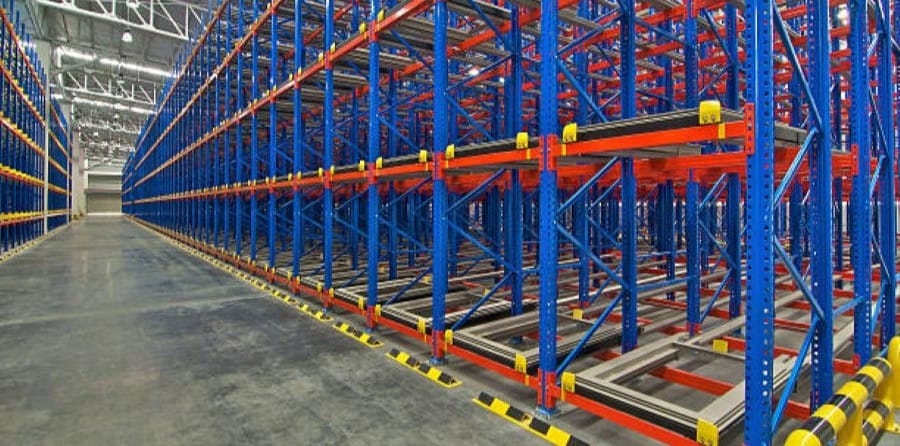
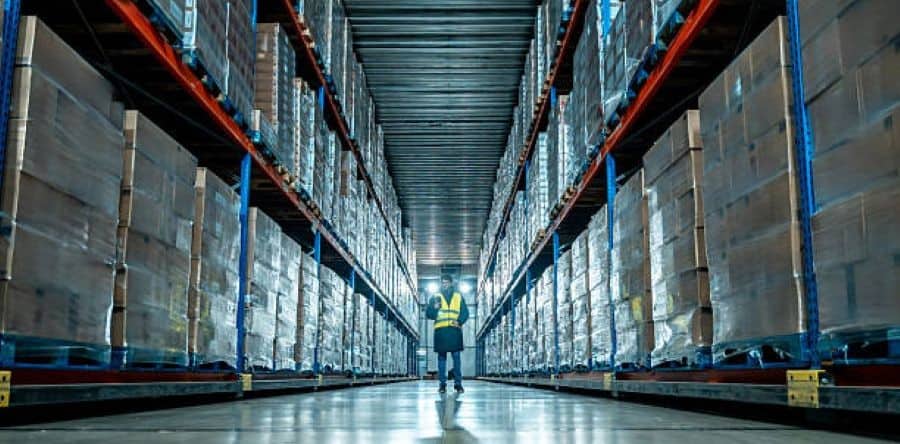
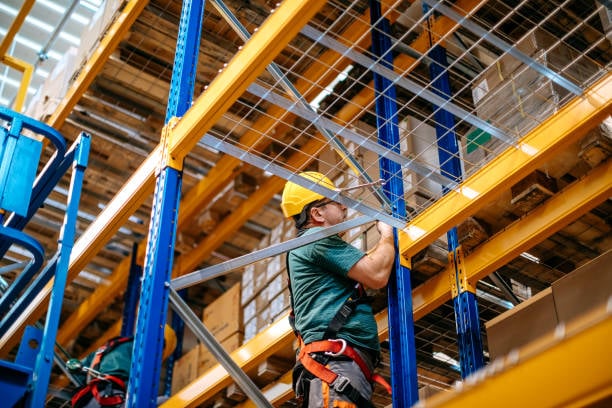
The manual pallet racking setup is a storage system implemented in warehouses that involves the use of manual handling equipment to store and retrieve products on shelves. In this process, the product is moved by well-trained personnel using forklifts, navigating across the warehouse through the aisles.
Source: iStock
Advantages of Manual Pallet Racking Systems
Manual pallet racking offers a wealth of benefits businesses can take advantage of at the get-go, including:
Low initial cost
While the entry price for manual pallet racking may vary depending on the type of rack and forklift selected, it’s typically lower compared to an automated setup. Businesses may begin with a simple selective pallet rack and a standard forklift and begin operations with minimal delay. This makes manual racking ideal for small and medium-sized enterprises, as well as those starting in the industry.
Extremely high flexibility
Another strong advantage of manual pallet racking setups is their great flexibility and adaptability as business demands grow. Pallet racks can be adjusted to accommodate various pallet sizes, while existing setups can be expanded as more SKUs enter the warehouse. Moreover, pallet racks can be integrated into other product picking and order fulfillment setups, making the process faster and more accurate.
Low maintenance threshold
As manual pallet racking systems use simple equipment that doesn’t rely on complicated software or expensive components, maintaining the setup is more affordable and faster. Conducting repairs to damaged sections can also be done by expert personnel without interrupting the entire operation, reducing potential profit loss.
Disadvantages of Manual Pallet Racking Systems
Despite the obvious perks of using manual pallet racking systems, it does have its share of downsides that businesses must be aware of. Some pain points of this setup include the following:
Human resource dependence
Since the strength of manual pallet racking relies on the skill and capabilities of the personnel, they can also affect how warehouse operations flow. The forklift operator’s skill level and physical fatigue directly impact warehouse efficiency, thus requiring enough time for them to train and rest to maintain optimal production levels.
Maximum space utilization
Most manual racking systems have to balance storage density and aisle width for proper operation, giving enough space for forklifts to move and turn within the facility. The extra aisle width can consume space that could be used for storage space, save for certain setups like VNAs and drive-in racking systems.
Safety Risk
With forklifts moving up and about the tight aisles within the warehouse, collisions may occur during daily operations. These collisions could damage the pallet racks, other equipment, or the actual product, resulting in operational delays, loss of product, and personnel injury.
Ideal Applications for Manual Racking Systems
The simplicity and accessibility of manual pallet racking systems make them indispensable for certain warehouse management scenarios, such as:
Order fulfillment
Warehouses that handle manual order picking to complete purchases, like those for e-commerce businesses, benefit from manual racking setups. Operators can designate separate rows for different tasks, leading to fast and efficient order completion.
Manufacturing workshops
From organizing tools to making spare components easily accessible to personnel, manual racking makes workshops more efficient and productive. Technicians can quickly find the items they need without interrupting how products are stored.
Stockrooms for retail
The retail market handles a wide variety of productss at any given time, from apparel and appliances to electronics and big-box items. Manual racking makes accessibility, inventory management, and product selection faster and easier for stockrooms.
Time-sensitive and fragile products
Handling small, fragile products like medical devices and items with strict expiry dates like food and beverages requires handloading to maintain safety and prompt turnovers. With manual racking, warehouses carrying these goods can efficiently manage their inventory while reducing risks of damaging or exceeding expiry dates.
Automated Warehouse Pallet Racking
Next, let’s look into automated warehouse pallet racking, a viable storage management and distribution option for high-volume warehouse operations.
What Are Automated Warehouse Racking Systems
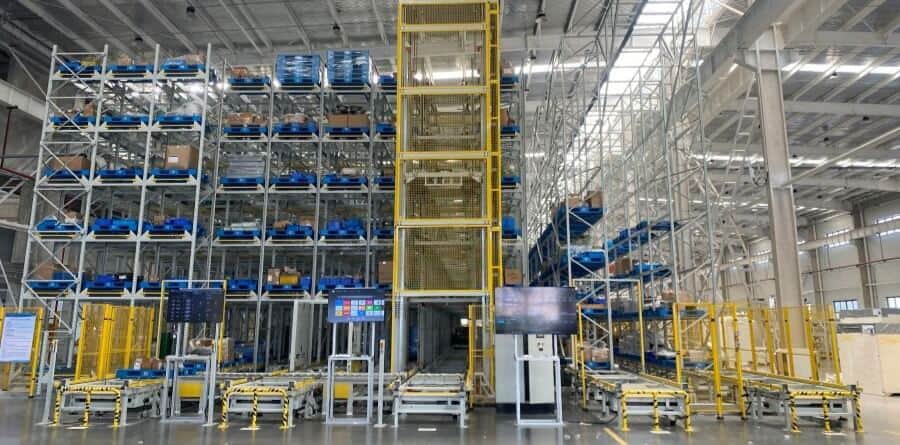
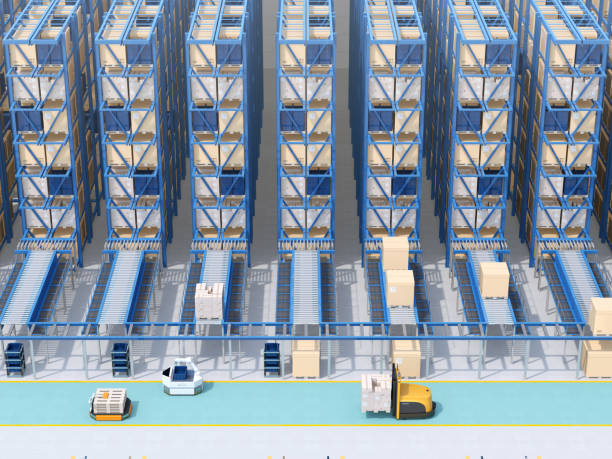
The automated warehouse racking systems take full advantage of modern technology to optimize warehouse operations by integrating computer-controlled solutions to pallet racking setups. It utilizes robotic shuttles, cranes, and conveyors to move, store, and retrieve pallets on shelves, reducing the need for manual assistance.
Source: iStock
Advantages of Automated Warehouse Pallet Racking Systems
Thanks to the adoption of computerized equipment, automated pallet racking systems can offer unique perks not available with the traditional counterpart.
24/7 operation
As the robotic pickers and movers could function for longer periods with minimal downtime, warehouses can operate endlessly to fulfill thousands of orders. And since these systems rely on pre-programmed instructions, facilities can expect consistency and accuracy in picking speeds.
Reduced losses
Manually moving pallets can sometimes lead to collisions that can damage the inventory or the shelves. With automated pallet racking, robots handle the product movement and sorting of pallets across the warehouse. This eliminates the risk of shelf collisions, protecting valuable investments and improving product quality.
High space utilization
Integrating automated equipment in daily warehouse management operations vastly increases the facility’s capability to store more product without affecting operational difficulty. It even allows warehouses to stack pallets at heights that are typically considered not safe for most forklifts, greatly improving space utilization.
Intelligent setup
Implementing data analysis alongside innovative technologies like automated racking, automated transportation, and automated sorting vastly optimizes warehouse management and storage efficiency. Data can be updated based on newly gathered information, which can help warehouses stay on top of the ever-changing and growing demand the industry pushes without the drastic downtime.
Disadvantages of Automated Pallet Racking Systems
Although the system offers a wealth of advantages, there are also some challenges in utilizing automated pallet racking.
High initial investment
Due to being relatively new and requiring technical expertise, most automated pallet racking systems have a higher initial cost to procure and install. This also carries out to making changes to the physical structure and logical paths after installation, as any modifications can not only be costly but also require more time to implement changes.
Costly operational and maintenance expenses
Another common challenge when utilizing this system is the recurring costs to keep the setup running in optimal condition. The automated racking system requires frequent maintenance to ensure all parts of the setup work as intended, and any equipment breakdown needs technical experts to repair or replace components.
Ideal Applications for Automated Racking Systems
Automated racking systems best suit warehouses requiring fast and continuous operations, along with locations with high space and labor costs, such as:
High-volume retail markets
Large order fulfillment centers that handle thousands of orders should benefit more from an automated racking setup than a manual one. Automated systems ensure these facilities conduct quick order fulfillment with precision and accuracy.
Cold storage environments
Certain warehouses have to maintain sub-zero temperatures to keep their inventory in ideal condition, which can be dangerous and costly for personnel to work in constantly. Automated robots can be configured to function well within these temperatures, making sure operations continue uninterrupted.
Urban distribution centers
Facilities located in urban locations have higher upkeep costs due to the expensive real estate in the area. Opting for automated robots to move products around urban warehouses will help reduce overall costs by maximizing the limited floor area for storage and employing minimal personnel.
Hazardous product handling
Some warehouses cater to handling products that can be dangerous to humans when in constant contact with them. Through a combination of automated robots and sensors, these facilities can operate securely and limit personnel contact with these materials.
Value vs. Cost: Key to Adapting the Right Pallet Racking System
At the end of the day, choosing whether to use an automated pallet racking system or a manual one depends on what your business values most. Manual setups are low-cost warehouse management options that focus on selectivity and flexibility, while automated pallet racking setups improve speed and storage density at a high initial cost. Whichever inventory management system you go with, make sure it complements your business goals well to get the most out of it.
Source your next pallet racking system for iWarehousing, the inventory management and manufacturing experts! We provide end-to-end support for all your pallet racking needs, from design and budget to customization and after-sales support. Grab your free quote from our team today!