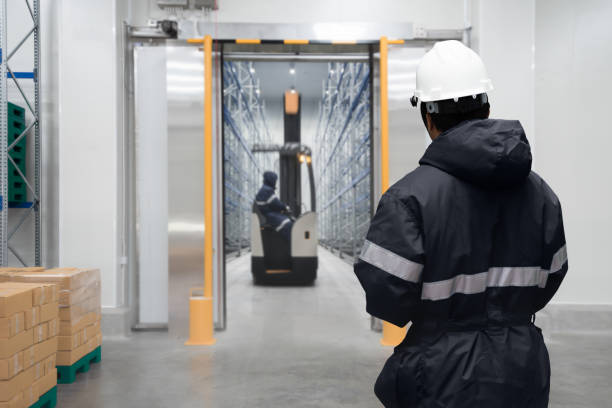

Maintaining an efficient and productive cold storage warehouse can be a challenge for many operators, as a fine balance between three factors that affect the facility’s performance. Proper utilization of expensive warehouse space, securing durable shelving that withstands cold temperatures, and regulating power costs are key components in operating a profitable cold storage facility.
In this article, we aim to assist warehouse operators in sourcing the right pallet racking systems for their cold storage facilities. We’ve prepared a step-by-step guide, along with some tips to make the sourcing as smooth and easy as possible.
Step 1 – Understand the Cold Storage Operating Profile
The first step in the sourcing process is knowing the various factors that influence your warehouse operations. This includes the temperature zones, inventory types, and physical constraints that could affect the shelving setup. Understanding these factors will help narrow down the type of racking system you should source, avoiding costly mishaps.
Temperature Zone
Cold storage facilities can be divided into three temperature zones based on how cold the area should be for the product they store. Each zone determines the type of steel grade and coating requirements in order for the shelving to withstand the temperature without damage or rusting.
The chiller zone operates at around 0 to 10°C and is used to keep dairy products, fresh food, and pharmaceuticals stable. Shelving made from coated cold-formed steel works well for this zone.
For freezer zones that operate within −18°C to −25°C, structural steel is recommended to store frozen vegetables, cooked meals, and baked goods while waiting for shipment. Column foot protection must also be installed at the base of these racking systems to prevent the shelves from sliding or moving.
Deep freeze zones below −25°C are used to maintain the condition of seafood, ice cream, and specialized chemicals. As such, the shelving systems must be made from reinforced structural steel that is hot-dip galvanized and coated with epoxy.

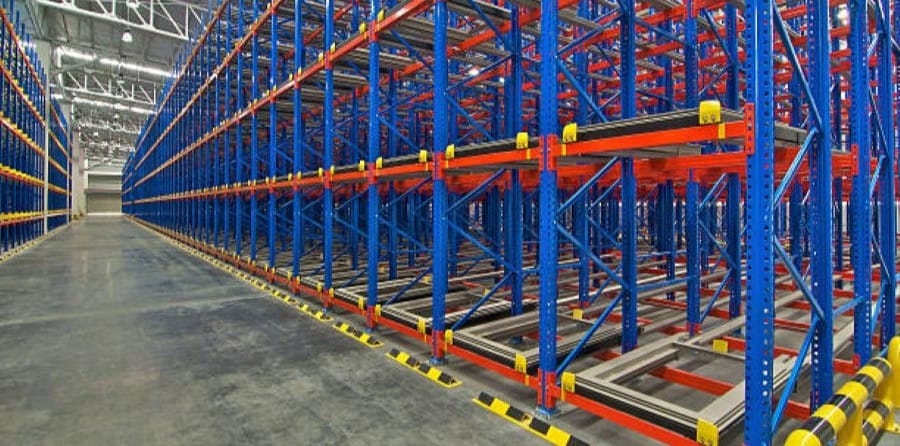
Source: iStock
Inventory Profile: Velocity, SKU Count, Pallet Depth per SKU
Next, create a SKU table that has information regarding the following:
- Turnover speed range,
- Pallet depth requirement for each SKU,
- Order characteristics, and
- Peak pressure points.
The table must also indicate the total number of SKUs in the warehouse and the preferred pallet spaces each SKU occupies on average.
The information derived from this table will help determine the type of racking system you’ll need to source. More on that in Step 4 of this guide.
Throughput and Rotation Strategy (FIFO vs LIFO)
Another critical hurdle when it comes to the racking system selection process is the rotation strategy your warehouse utilizes to move goods. Warehouses typically use one of two main rotation strategies, namely:
First-In, First-Out (FIFO)
Process: Ideal for perishable goods and products with short life spans, this strategy has the first products stored leave the warehouse first to ensure product quality.
Ideal Racking System: Pallet mobile racking, selective racking, and shuttle setups configured in FIFO mode.
Last-In, First-Out (LIFO)
Process: Used for non-perishable items or products with longer storage life, this strategy has the oldest products move last from the warehouse, prioritizing the most recent batch received.
Ideal Racking System: Drive-in racking, push-back racking, and shuttle systems configured in LIFO mode.
Facility Constraints
The existing conditions of the warehouse must also be factored in during the selection process, as it determines which proper racking solution will match the facility. Some of these include:
- Building clear height – dictates the height of vertical storage and the total number of floors per racking system
- Column spacing and irregular areas – the available space will influence the shelving layout to implement and if it can accommodate deep storage systems
- Door location and loading/unloading platforms – must be included for proper shelving layout and to provide enough space for unhindered movement within the facility
- Floor condition – lets the manufacturer know what installation process should be used, which will be further explained in Step 6
Step 2 – Choose the Right Material and Coating
Next, let’s look at the steel quality of your racking system. As the main component in making any reliable racking setup, it’s crucial to choose the right type of steel to ensure it can withstand the cold storage conditions.
What Happens to Steel Below −18°C
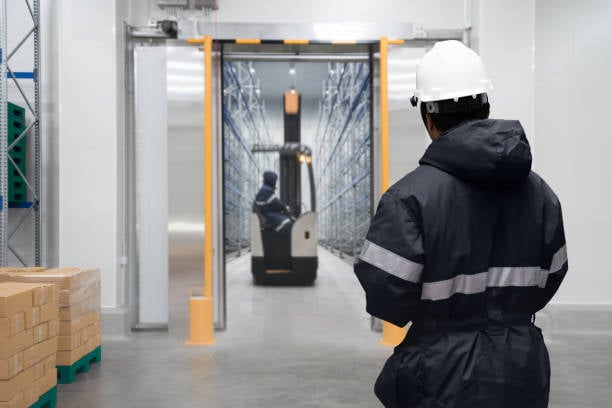
RMI standards indicate that the transition point of steel from ductile to brittle is approximately 0°F (−18°C). Once exposed to a lower temperature, steel changes from “deformation under stress” to “fracture under stress,” where a forklift collision could fracture the steel instead of denting it.
This points out one of the biggest risks of using the wrong racking system on cold storage facilities. If the racking system is not made to comply with cold storage needs, it could break when hit, leading to damaged goods or operational delays.
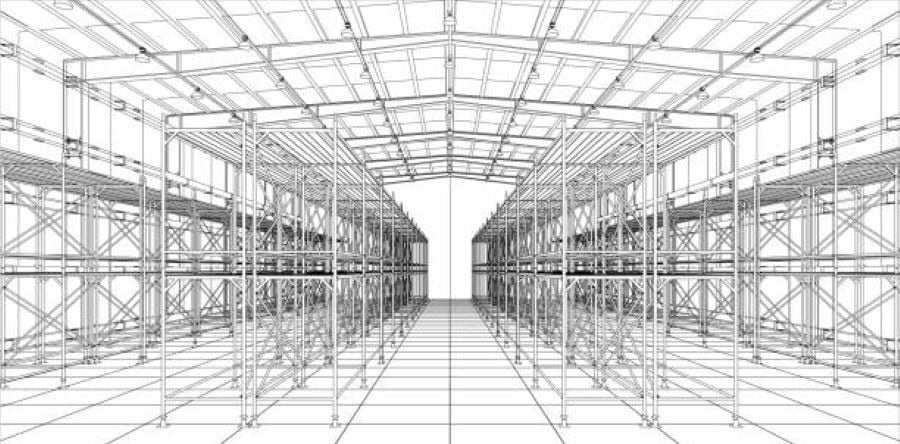
Source: iStock
Structural Steel vs Cold-Formed Steel
The two main steel types used in making shelving setups for cold storage facilities are structural steel and cold-formed steel.
- Cold-formed steel is formed by rolling sheets of thin steel at room temperature to create the bars used in making the racking system’s frames. It’s a low-cost and flexible material that can be used for chillers when covered with a protective coating. However, it’s not suitable for colder temperatures beyond −18°C, as the material has a high risk of brittleness.
- Structural steel is a thicker, heavy-duty steel that requires hot rolling to form the frames and other components of a racking system. It has better toughness and impact resistance, making it a better option for freezer and deep freeze facilities. The downside is that the material costs more to procure and is quite rigid.
Coating and Corrosion Protection
Corrosion leads to gradual degradation of the steel material, which can weaken the frames and eventually destroy the racking system. In cold storage facilities, corrosion comes from three different sources, namely:
- Condensation caused by temperature differences,
- Humidity fluctuations resulting from constant opening and closing of doors when loading and unloading platforms, and
- Long-term frosting and defrosting cycles.
To prevent corrosion from happening on the racking systems, it’s best to cover the frames with a protective coating. The coating prevents moisture from coming in contact with the steel frames, thus keeping them strong and solid. There are three preferred ways of coating the steel frames:
- Hot-dip galvanizing – a layer of zinc covers the frames to make them usable in cold storage facilities for decades
- Epoxy powder coating – the frame is covered with a layer of powdered epoxy, improving its corrosion resistance for chiller zones
- Dual coating – mandatory for deep-freeze cold storage use, the steel frames are coated with a layer of hot-dip galvanized zinc and an epoxy topcoat, for excellent corrosion resistance.
Pallet Material Compatibility
Along with selecting the material for the racking system, it’s also helpful to choose the appropriate material for the pallets used to carry the goods. Certain materials work best at specific temperatures, such as:
- Wood – pallets made from wood absorb moisture, freeze, or grow mold in cold storage. Not recommended for cold storage use.
- Plastic – trays and pallets made from plastic can handle cold temperatures to a certain extent. As it begins to break below -20°C, it can be used for chillers and freezers but not for deep freeze facilities.
- Steel – a popular option for cold storage facilities, steel pallets can handle cold temperatures even below −80°C, fitting deep freeze requirements.
Step 3 – Floor Flatness and Anchoring
Floor flatness is an important factor when planning to source a pallet racking system for your cold storage warehouse. A flat floor provides the racking system the stability it needs to reliably carry the goods without slipping or falling. Conversely, uneven flooring can lead to damaged goods or costly operational failures.
Why Cold Storage Floors Are Different
Frequent freeze-thaw cycles and foundation settlement can affect how flat the warehouse floor is, as the ground can expand when it absorbs moisture. This not only influences the verticality and straightness of the pallet racks but also the accuracy of shuttles during operations.
As such, warehouse floors must be as flat as possible to ensure that the track is equally as flat for optimal performance. Any deviation exceeding ±5 mm within a 28-meter aisle can lead to an overloaded drive motor, resulting in operational downtime.
Reference Standards for Floor Flatness
Global industry standards define how cold storage warehouse floors should be made and maintained for proper operations. Here are a couple of these standards that can be used as reference:
- FEM 9.831: Reference Standard for Floor Flatness for Shuttle/Automated Rack Installation
- DIN 18202: Standard for flatness tolerances in building works, used in conjunction with FEM 9.831
Additionally, flooring for cold storage facilities must comply with certain standards before installing pallet racking systems, including:
- No shrinkage joints
- Concrete grade of at least C20/25
- Anchoring depth of at least 150mm
Anchoring Requirements in Cold Storage
Industry safety standards recommend an anchor depth of 3.25 to 4 inches or 82mm to 102mm to guarantee the stability of the pallet racks. Additionally, the concrete compressive strength must be at least 4,000 PSI or 28MPa to resist surface cracking or spalling due to installation or continuous heavy loads.
When it comes to anchoring the pallet racking systems in place, there’s the option of using either expansion bolts or chemical anchors. Both provide the same overall function of securing the racks to the warehouse floor, but each does it differently and offers certain advantages.
- Expansion Bolts – steel bolts are inserted into holes created in the concrete, holding the pallet racking system to the ground. The bolts then expand upon full insertion, creating a solid anchor for the racks but could further stress the concrete floor. They can also leave microscopic gaps where moisture can enter, which could expand upon freezing and could crack the concrete from the inside.
- Chemical anchors – a liquid resin is poured into the drilled hole followed by a steel rod, which creates a solid anchor that will hold the pallet racks once cured. The process doesn’t stress the concrete floor, reducing potential failures or breakage. Additionally, the resin fills the hole fully, creating an airtight seal that no moisture can penetrate.
For cold storage warehouses, most experts recommend opting for chemical anchors over expansion bolts based on the benefits offered. However, keep in mind that the process takes longer to complete, mainly due to the time needed to cure the resin.
Step 4 – Compare Warehouse Racking System Types for Cold Storage
Now, let’s move to the main part of the process, choosing the right pallet racking system to use for your cold storage warehouse. In this section, we will look at the strengths and limitations of several racking system options and how they can fit in a cold storage setup.
| Racking System | Storage density | Access flexibility | Throughput | Space utilization | Applicable scenarios (cold storage) |
| Selektive Palettenregale | Low | Maximum – Direct access per depositor | Middle | Low | Multiple SKUs, low to medium batch sizes, requiring direct access to each pallet |
| Double-Deep Racking | Middle | Medium to high – 50% of the storage space is directly accessible. | Middle | Middle | Medium batch size, moderate number of SKUs, and a desire to increase density. |
| Einfahrregale | High | Low – Access can only be made from the access point. | Middle | High | Few SKUs, high volume, LIFO management, limited budget |
| Pallet Flow Racking | High | Middle – FIFO Automatic Flow | High | High | High turnover, strict FIFO (First-In, First-Out) management, and key shelf-life management |
| Push-back Racking | High | Medium – LIFO, 2-5 depth | High | High | Medium to high turnover, LIFO acceptable, desire to increase density |
| Shuttle Racking | Highest | Medium to High – Automatic System Access | Highest | Highest | High turnover, high density, and a desire to reduce working time inside cold storage facilities. |

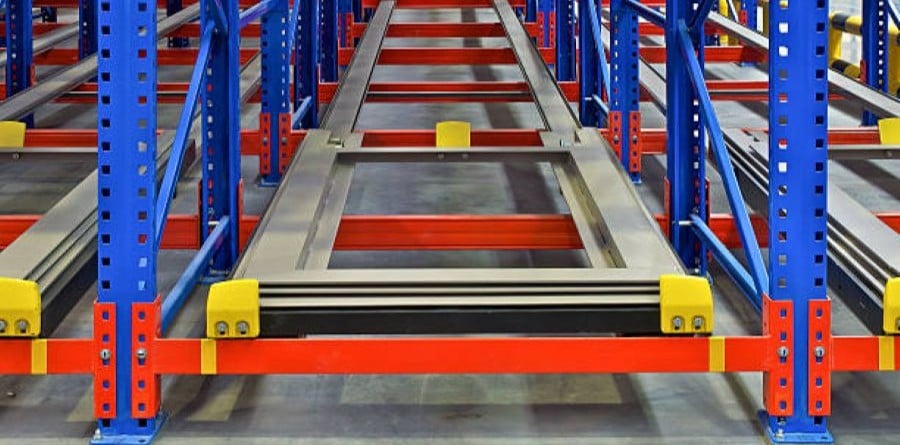
Source: iStock
Selective Pallet Racking – The Baseline
Considered as the standard for cold storage pallet racking, selective pallet racking systems let users quickly store and pick products with minimal hindrances.
Key Strengths:
- Highest level of flexibility that allows complete access to all goods on shelves
- Easy to reconfigure and expand
Limitations:
- Low storage density.
Application in Cold Storage Warehouses:
- Great for fast-moving SKUs and warehouses that prioritize high turnovers.
- Must be covered with an anti-corrosion coating and column foot protection for longer service life.
Drive-In Racking
With the drive-in racking system, traditional aisles are replaced by additional storage space, with forklifts driving into the racks to store or collect pallets.
Key Strengths:
- Increase storage density capability by 75%
- Significant energy savings of up to 45%.
Limitations:
- Limited channel depth
- Cannot randomly access goods stored within the racks.
Application in Cold Storage Warehouses:
- Ideal for handling large volumes of single SKU products with a LIFO setup.
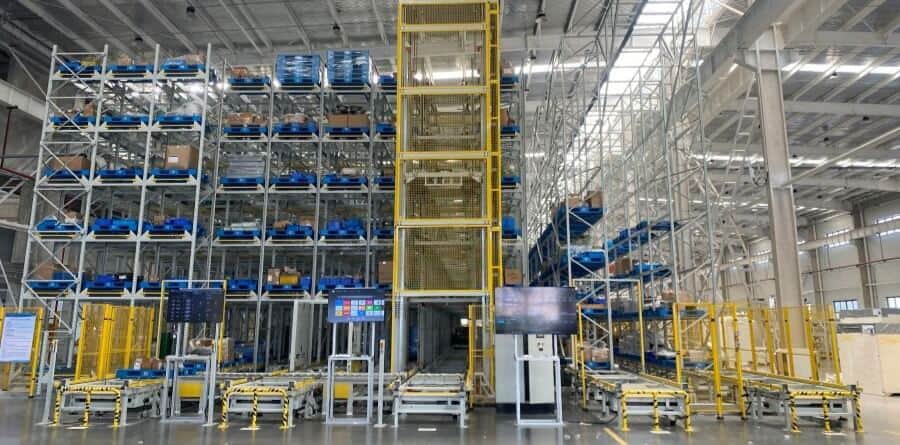
Paletten-Shuttle-Regalsysteme
A pallet shuttle racking system utilizes an automated shuttle rack to move products in and out of the cold storage area. This not only limits human interaction but also keeps goods in ideal temperatures throughout the process.
Key Strengths:
- Reduces low-temperature worktime
- Can handle FIFO and LIFO strategies
- Improves storage density by up to 80%
- Saves up to 40% on energy costs
Limitations:
- High startup costs for specialized materials and installation
- Requires intensive planning for stable operation
Application in Cold Storage Warehouses:
- Usable in any cold storage temperature, provided the right materials and installation are done for the system to maintain operational stability.
Pallet Flow Racking
Also called gravity flow racking, this system has pallets move through the aisles using a combination of gravity and sloped wheel tracks or rollers.
Key Strengths:
- Hohe Speicherdichte
- Great for high throughput, fast-moving SKUs
Limitations:
- Limited to FIFO inventory strategy
- Channel depth only goes up to 12 trays deep
Application in Cold Storage Warehouses:
- Ideal for warehouses handling goods with short shelf lives and quick turnovers.
Mobile Racking
Instead of moving pallets, a mobile racking system has the racks on motorized carriages to have them run on floor-embedded steel rails.
Key Strengths:
- Highest storage density of up to 90% increase
- Energy saving of up to 50%
Limitations:
- Low throughput
- Requires moving an entire row of shelves to access other storage locations
Application in Cold Storage Warehouses:
- Suitable for Warehouses with diverse SKU range
- Low throughput facilities with limited spaces
Step 5 – Cold Storage Layout Optimization
The next step in the process involves how to properly lay out the cold storage facility for full optimization. Since warehouse space is limited and expensive, maximizing every floor area is important to make the most out of your investment.
Zone by Velocity
Start by dividing the warehouse into different areas or zones, each focusing on a specific process. This also makes sourcing pallet racking systems more efficient, as you’ll have a better grasp of what each zone will need.
- Fast-flow zone – ideally located near the loading and unloading areas of the warehouse, this is a perfect spot for selective pallet racking or pallet flow racking setups.
- Mid-level zone – typically situated at the middle of the facility, shuttle racking or drive-in racking should be used to fully maximize this area.
- Slow-flow zone – as the deepest part of the warehouse, utilizing drive-in racking or deep shuttle racking systems allows operators to use every inch of the floor space.
Dedicated Travel Lanes and Staging Rules
Congestion is arguably one of the biggest challenges that any cold storage facility faces throughout its daily operations. Congested lines can increase the times doors are kept open, thus increasing frost buildup and downtime required for periodic maintenance.
A way to prevent this is by separating the replenishment flow and picking flow for efficient order fulfillment. Replenishment aisles are typically situated at the rear end of the facility, where goods are stored upon receiving them. The picking aisle, on the other hand, is located at the front end of the warehouse, near the shipping area.
As goods are picked, processed, and prepared for shipping at the picking aisle, pallets from the replenishment aisle are then pushed forward using carton flow or pallet flow setups. This system keeps goods constantly flowing through the warehouse while reducing congestion.
Airflow Design for Temperature Consistency
A rule of thumb when it comes to optimal cold storage warehouse layout: air circulation should never be obscured. Proper air circulation ensures the warehouse maintains its ideal condition, and any hindrance to the air flow can increase the internal temperature, leading to product spoilage.
With this in mind, the racking systems must be placed in areas that won’t obstruct the air flow. Selective racking and shuttle racking setups are preferred over other systems in this regard, as their open structure allows cold air to freely flow through the facility.
Step 6 – Installation and Acceptance in Cold Environments
The installation process for pallet racking systems in cold storage warehouses begins way before the setups are sourced from manufacturers. Additional time is needed to prepare the facility before the racking systems arrive, as well as testing them for commissioning.
Pre-installation Preparation
Installation begins by checking the warehouse floor and making sure it is within acceptable standards before the racking systems arrive. Some of the tests required to validate floor flatness include:
- Slab integrity – must be at least 4,000 PSI
- Floor profile – run several flatness tests to ensure the ground is even
- Aisle layout – laser-marking baseplate grids in preparation for anchoring
Once the racking systems arrive, they must be properly acclimated to the low temperature of the cold storage warehouse to prevent thermal contraction or condensation.
- Start by placing the racks in an ambient-temperature location for at least 24 hours, as exposing them directly to the cold may cause excess moisture to condense on the steel surface. Ideally, only unbundle the racking system once the steel and indoor ambient temperature match.
- Next, dry off any surface condensation found on the steel components, including the bolts and beams. Pay close attention to high-stress components like the baseplates, making sure they’re free of any moisture or oil residue to prevent condensation.
Installation Precision During Construction
With the warehouse floor and pallet racking systems fully prepared, it’s time to install the racks. However, installing racking systems in cold storage facilities requires extra care and precautions to prevent any issues during operation. Cold storage warehouses have higher vertical configurations and tighter clearances to fulfill, not to mention adapting to specific temperature conditions.
- For vertical column tolerance, RMI standards indicate a maximum out-of-plumb ratio of 1 to 0.5 inches per 10 feet of height or a 1:240 slope. But for cold storage facilities, the requirement is raised to at least 1:500, especially when using mobile racking, VNA trucks, or ASRS setups.
- If using mobile racking, an additional requirement is to check the rail joint gap to prevent the rails from misaligning or locking. Gaps should be between 12mm to 14 mm, anticipating the shrinkage of rail segments due to cooling.
- Moreover, thermal contraction or shrinkage must be expected and added to the installation configuration. As such, the best practice is to leave adequate gaps between the racks, so they can shrink appropriately and prevent bending.
Cold Commissioning
After installing the pallet racking systems in the warehouse, start bringing the temperature down to help the racks properly acclimate to the environment. Once the set value is reached, run a full-load test at the target temperature to see how the racks handle the situation.
If using a pallet shuttle racking system, run a complete storage and retrieval cycle to test the system’s functionality at the target temperature.
Results for every test must be recorded, along with any adjustments made during the testing phase.
Post-installation Documentation
The last part of the installation process is handing all the deliverables to the warehouse operator as proof of completion. The documents will be used as a reference in case there are any defects or problems with the racking system after installation. This should include:
- Material certificates
- Coating test reports
- Installation accuracy measurement records
- Shuttle cold-state operation test results
Step 7 – Inspection and Maintenance in Cold Storage
Taking care of the pallet racking systems after installation should never be neglected, as it guarantees the long-term performance of your investment.
Why Cold Storage Requires More Frequent Inspections
Due to the lower temperatures of cold storage warehouses, the steel components of pallet racking systems are more prone to breaking than those used in regular environments. Additionally, corrosion occurs faster when steel is constantly exposed in locations with more moisture, as condensation happens more often.
These factors indicate that the pallet racks must be inspected more frequently and diligently to ensure they stay in ideal working conditions. Regular audits also help warehouse operators to address any issues as soon as possible, preventing long-term damage or extended delays due to downtime.
Daily/Weekly Inspection Checklist
Here are some key points to look at when conducting a daily or weekly inspection:
- Are there any impact deformations at the base of the column?
- Are the anchor bolts loose?
- Does the gap between the rail joints exceed the tolerance?
- Are there any abnormal noises during the shuttle test run (shuttle system)?
- Is there any frost causing the goods to stick together?
Annual Professional Inspection
Along with regular inspections, pallet racking systems also need a comprehensive annual audit to check their overall condition. This inspection includes:
- Precision re-measurement of horizontality and verticality
- Non-destructive testing of welds
- Anchoring torque spot check
- Special inspection item: loosening of anchor bolts due to frost heave.
Selecting a Pallet Racking System for Cold Storage Made Easy
Finding a pallet racking system for your cold storage warehouse should never be a complicated and taxing process. All it takes is understanding the warehouse’s operating conditions, knowing what your facility requires, and matching them with the ideal pallet racking system that meets these needs. However, it does not end at the procurement process, as the installation and regular maintenance also demand your full attention to ensure everything is in working condition.
Need help sourcing a reliable pallet racking system for your cold storage facility? iWarehousing is here to be your partner from order placement to commissioning! We’re industry experts with a proven track record in manufacturing diverse pallet racking solutions specifically designed for cold storage facilities. Let’s get on a call today to begin your free consultation.