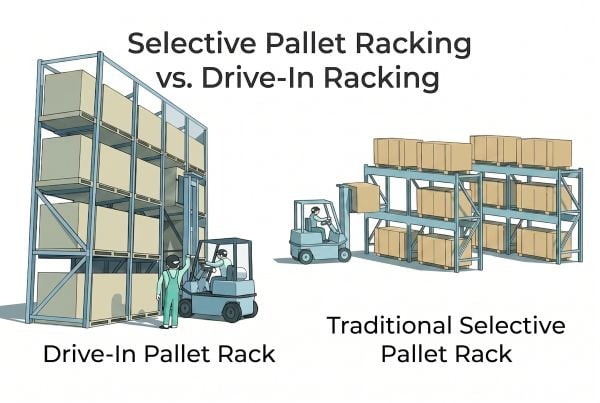
Every warehouse has distinct inventory management requirements, based largely on the product they handle and the number of SKUs they carry. While selective pallet racking and drive-in racking setups can address their industry demands, each has unique advantages that work better on specific applications.
In this article, we will look into these advantages and see how these inventory management solutions can fit your warehouse’s operational needs.
In-depth Comparison of Selective Pallet Racking and Drive-In Racking
We begin the discussion by discovering the key differences between selective pallet racking and drive-in racking systems with an easy-to-understand table. Critical features warehouses look for in storage management setups are outlined, along with how the two function in each category.
| Feature | Selective Racking | Drive-In Racking |
| Inventory Flow | Flexible inventory setup complements the FIFO (First-In, First-Out) method | Rigid, typically follows a LIFO (Last-In, First-Out) setup |
| Space Utilization | Low, requires aisles in between rows for forklift access | High: replaces standard aisles with a deep-space storage configuration |
| SKU Diversity | Ideal for warehouses that carry many SKUs | Best for facilities that manage a few SKUs |
| Picking Speed | Very fast, allows for instantaneous access to pallets | Slower, requires forklifts to enter and exit the lanes |
| Upfront Cost | Low initial investment, uses simple frames and beams | High capital requirement, as the setup requires specialized rails and structures |
| Forklift Compatibility | Compatible with almost all standard forklifts | Limited to models that fit lane dimensions. |
What is Selective Racking and Drive-In Racking
With key comparisons out of the way, it’s time to dive deeper into how selective racking and drive-in racking systems address specific warehouse management needs. And to provide a stronger framework, we will start by defining what these inventory systems are and what they offer.
Selective Racking
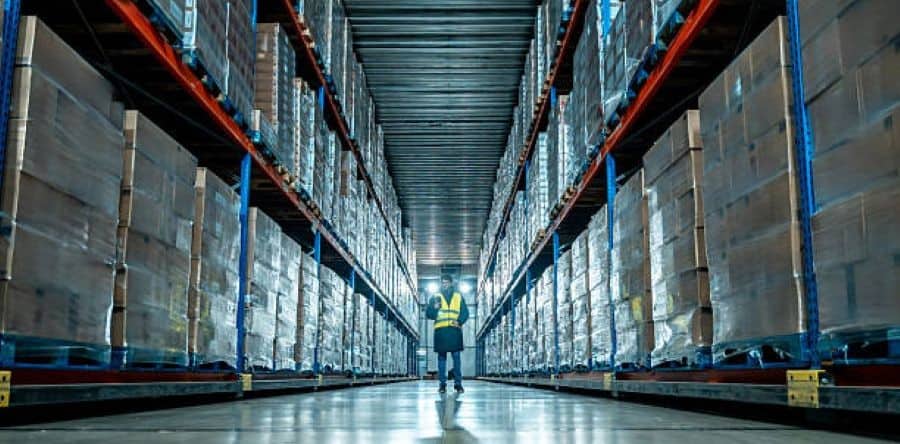
Selective pallet racking systems are simple yet efficient means of managing inventory in warehouses of any size or location. Formed with a combination of upright frames and horizontal beams, the setup allows forklift operators to store pallets in rows, which can be directly accessed from the aisles.
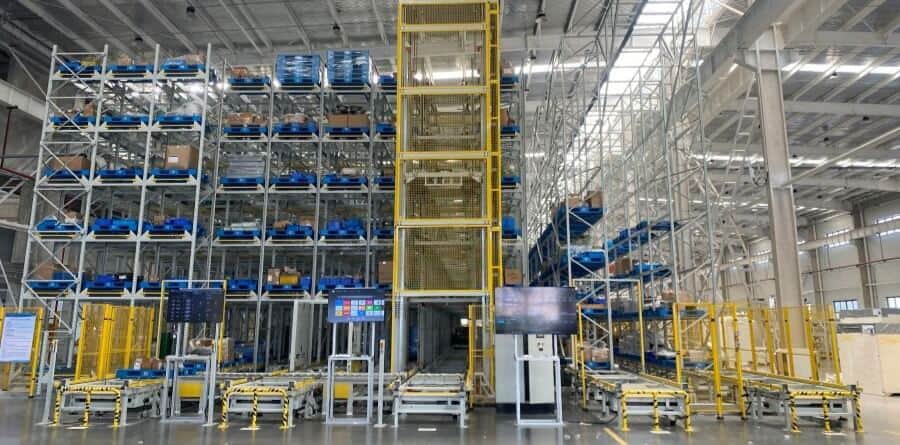
What makes selective racking a popular choice among warehouses across various industries is its inherent flexibility and ease of access. When speed, SKU variety, and batch control are critical for warehouse operations, expect selective pallet racking setups to be part of their success. It can also be combined with other storage and setups like automatic pickers and conveyor lines for quick and seamless order fulfillment.
Drive-In Racking:
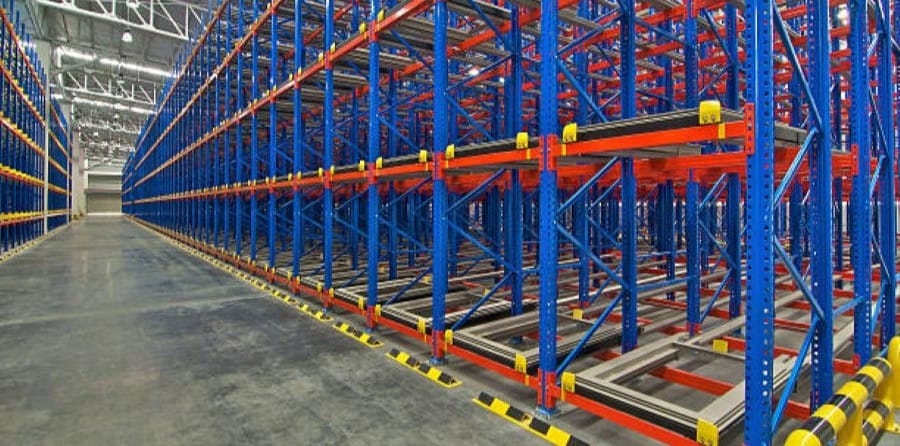
Drive-in racking systems are inventory management solutions specifically designed for high-density pallet storage. Maximizing the warehouse’s available space, this setup utilizes deep, continuous lanes to store pallets back-to-back on support rails instead of placing them on rows. Specialized forklifts then enter the racking structure to place or retrieve pallets from the rails, facilitating the inventory flow.

Where selective racking focuses on SKU diversity and quick access to pallets, drive-in racking is the pinnacle of high-volume storage density. As it replaces aisle space for storage space, this setup uses up to 90% of the warehouse space to store more pallets within the facility.
Inventory Flow (FIFO vs. LIFO)
Inventory management facilities follow one of two methods in moving product: the “First In, First Out” or FIFO, and “Last In, First Out” or LIFO. The storage system a warehouse implements mainly dictates how inventory will flow, thus playing a critical role in how they do business.
Selective Racking (FIFO):
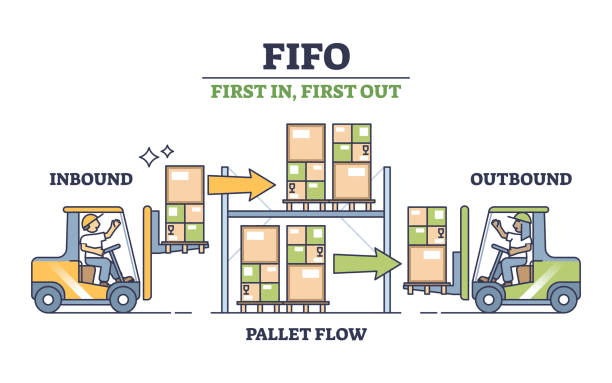
In a selective pallet racking system, pallets are positioned in a single row, always giving forklift operators uninhibited access to the product. This setup lends itself well to the First In, First Out method of inventory flow, as pallets can be retrieved according to when it was stored.
Source: iStock
Drive-In Racking (LIFO):
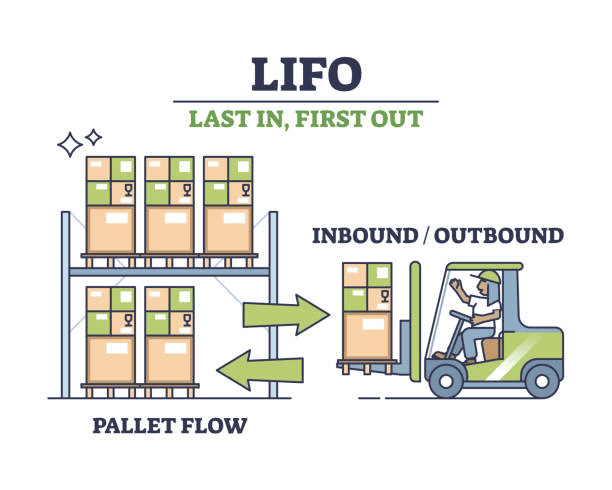
With the specialized design of drive-in racking systems, pallets are stored in front of each other, essentially blocking access to the products placed earlier. Its setup forces the warehouse to follow a Last In, First Out flow of inventory, as the last pallet in must be removed first to retrieve older product.
Source: iStock
Accessibility vs. Storage Density
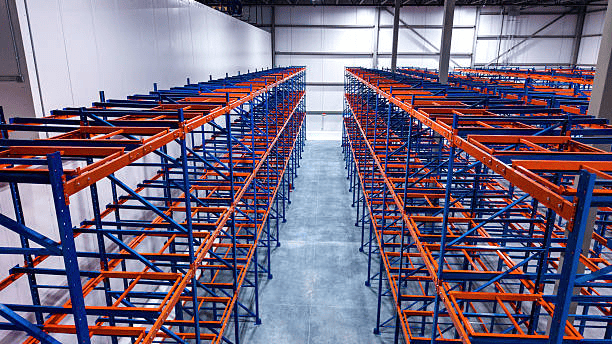
Pallet accessibility and storage density are two sides of the same coin: opting for one can inhibit access to the other. Storage management systems would typically be ideal for one option, but can pose a challenge for the other option.
Source: iStock
Selective Racking:
Selective pallet racking excels in high accessibility and 100% selectivity, giving personnel full access to the products they need. However, because pallets are stored in single rows and the balance between aisles to rack, it has low storage density.
Drive-In Racking:
Compared to selective racking, drive-in racking setups prioritize storage density above all else by eliminating most aisles to give more room for pallet storage. To compensate for the additional room, however, the setup limits access to other pallets, as goods are stored in columns rather than in rows.
Structural Integrity and Forklift Interaction
An inventory management system’s structural integrity and interaction with forklifts, the main equipment used to move pallets, go hand in hand in maintaining ideal warehouse operations. Not only should the setup be able to securely carry the pallets, but also be capable of handling constant contact from the machinery.
Selective Racking:
In a selective pallet racking setup, the racks are only carrying the weight of the pallets. Forklifts stay on their designated aisles as they place and remove pallets, resulting in minimal contact.
Drive-In Racking:
Drive-in racking systems not only carry more pallets due to their storage density but are also constantly in contact with forklifts as they drive in and out of the structure. As such, these setups are constructed with more durable materials with additional braces and strategically designed to ensure they can properly handle product and forklift operations.
SKU Diversity and Scalability
Maximizing the inventory management system’s utilization involves considering the quantity of product types a warehouse stores at one time. Potential plans for expansion should also be factored in, as the setup’s type can be more adaptive to scalability than the other.
Selective Racking:
The single-row design of the selective pallet racking setup makes it viable for warehouses that carry multiple SKUs, as each slot can store a different SKU. This also allows businesses to easily expand their product lineup with more products over time, as pallets are always within reach.
Drive-In Racking:
For warehouses that focus on high-value, low-variety inventory, drive-in racking systems would complement their operations best. As pallets are placed in front of each other, they are ideally configured to hold a certain SKU type at one time to avoid honeycombing or empty, unreachable spaces.
Cost Analysis (CAPEX vs. OPEX)
Purchasing an inventory management system requires making a significant investment, not only upfront but also in ongoing costs in repairs and maintenance. This is where CAPEX and OPEX come in, where CAPEX or Capital Expenditure refers to initial costs, while OPEX or Operational Expenditure is for the daily upkeep.
Selective Racking:
Selective pallet racking setups have a lower initial cost, as it’s made from standard steel and require minimal assistance for installation. However, since the system can only carry single pallet rows and needs extra aisles for forklifts to operate, costs for real estate can be higher.
Drive-In Racking:
Initial costs for drive-in racking systems are higher compared to selective racking alternatives, as it’s made from reinforced materials to carry the extra load and to add durability. But the cost is compensated by a lower cost per square meter of storage, as it maximizes the available warehouse space.
The Tale of Two Storage Management Systems
Selective pallet racking and drive-in racking systems, while both functioning as effective inventory management solutions, have distinct features that address different warehouse needs. Choosing the right one for your warehouse depends on several factors, including the number of SKUs carried, space availability, and inventory flow method.
On one hand, selective pallet racking setups are simple, cost-effective systems that allow quick access to goods and can manage multiple SKUs at once. On the other hand, drive-in racking systems focus more on product density and maximizing the warehouse area by replacing forklift aisles with more storage space. Source your next storage management system from iWarehousing today! We’re experts in manufacturing custom inventory management solutions specifically designed to meet your business requirements. Grab your free quote today.