Safety Bar

Reliable Safety Bars for Warehouse Racking Systems

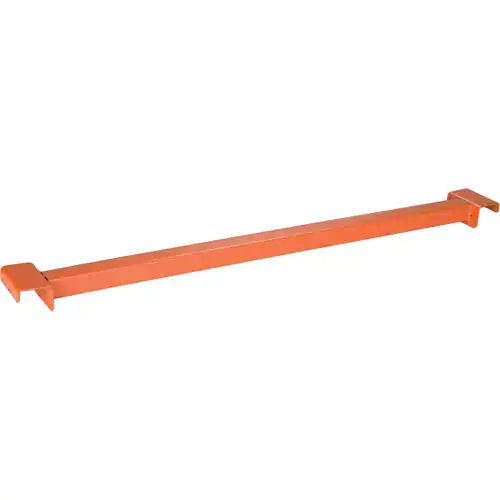
A challenge in storing and moving pallets is pallets accidentally falling from the beams, resulting in damage to the products or the system. iWarehousing’s line of safety bards ensure that pallets stay securely within the pallet beams, thus preventing them from falling or jamming within the system. We manufacture various safety bars with the same high-quality steel used in crafting our storage racks, ensuring superior durability and reliability.

safety bar 1

Featured Products

female,engineer,and,male,supervisor,standing,in,modern,industrial,factory,

Designed by Experts for Your Customers

Different storage rack designs and applications require specific safety bars to properly secure the pallets. The experts at iWarehousing cater to this demand by offering a robust customization process that includes design modification, adjustment in dimensions, and surface coating options. With our design and manufacturing capabilities by your side, we can diversify your inventory with unique safety bars.

Industries We Serve

The iWarehousing Advantage

Manufacturing Since 1990

Trust more than 30 years of manufacturing experience to deliver exceptional results in every project.

Precision Machinery

Our workshops are equipped with the latest manufacturing tools for fast and efficient production.

Flexible Payment Terms

We establish a lasting cooperation by setting up a payment plan that works with your budget.

Strict Quality Control

Senior inspectors check every aspect of the safety bars, ensuring they meet our strict standards.

Material Transparency

We uphold strong dedication to transparency, making sure measurements and materials are as honest as possible.

Responsive Support Team

Seasoned support specialists take care of every concern within 24 hours with solution-oriented responses.

FAQ

What is a Pallet Racking Safety Bar?

What is a pallet racking safety bar?

A pallet racking safety bar is a simple yet critical safety device installed horizontally between the front and rear beams of a racking level. It acts as a secondary support and containment barrier designed to catch and support a pallet if it is improperly placed, slips, or if a non-solid pallet (e.g., open-bottom) is used, thereby preventing the pallet and its load from falling through the rack.

How does a safety bar work?

It functions as a fail-safe physical stop. When installed, it spans the gap between the load beams. If a pallet is not fully seated on both beams, or if its bottom boards break or are missing, the safety bar provides a supporting surface to arrest the fall, containing the hazard at its source.

Key Factors for Using Safety Bars Effectively

When are safety bars essential or strongly recommended?

Their use is critical in specific high-risk scenarios: 

1) Use of Open-Bottom or Stringer Pallets: Where pallets lack full decking. 

2) Use of Damaged or Poor-Quality Pallets: To mitigate the risk of board failure. 

3) High-Value or Hazardous Inventory: Where a fall could cause severe damage or safety incidents. 

4) High-Traffic Picking Locations: To protect personnel working below. They are a fundamental component of a defense-in-depth safety strategy.

What is the typical load rating, and what does it mean?

Safety bars are rated for uniformly distributed load (UDL). Common capacities range from 500 lbs to 2,000 lbs per bar. It is crucial to select a bar whose rated capacity meets or exceeds the maximum potential load it might need to catch from a falling pallet on that level. Never exceed the manufacturer’s rating.

Where Safety Bars Fit Among Racking Accessories

How do safety bars compare to wire mesh decking? Do they replace it?

They serve complementary but distinct purposes and are often used together for maximum safety. Wire Mesh Decking provides a continuous supporting surface, converting a beam level into a solid shelf, ideal for small items. Safety Bars provide targeted fall prevention for palletized loads. Safety bars do not fully replace decking; instead, they are a cost-effective and specialized solution specifically for pallet fall-through prevention where full decking is not required or practical.

How to Select & Install Safety Bars

Are safety bars adjustable or fixed?

Both types exist to suit different needs: 

1) Fixed-Length Bars: Pre-cut to fit specific beam lengths (e.g., 96”, 120”). Offer maximum strength and stability. 

2) Adjustable/Clip-On Bars: Can be resized or repositioned, offering flexibility for reconfigured rack bays. Ensure any adjustable mechanism is robust and secure under load.

How do I properly select and install safety bars?

Follow this straightforward guideline:

  1. Conduct a Risk Assessment: Identify all rack locations using open-bottom, damaged, or non-standard pallets. Prioritize levels above walkways or workstations.

  2. Measure and Specify: Precisely measure the clear distance between your rack beams (front to back) to determine the required bar length. Select the appropriate capacity based on stored pallet weight.

  3. Choose the Mounting Type: Decide between bolt-on (most secure) or friction-fit/clip-on (for easier installation and adjustment) models based on your need for permanence vs. flexibility.

  4. Correct Installation: Install the bar parallel to and centered between the beams. For bolt-on types, ensure all fasteners are tightened securely. The bar should be level and make full contact along its length.

  5. Inspection & Culture: Incorporate safety bar integrity into your regular rack inspection routine. Train forklift operators and warehouse staff on their purpose—they are a safety backup, not a substitute for proper pallet placement.

Get A Free Quote