
iWarehousing’s range of slotted angle shelving systems provides warehouses worldwide with efficient, low-cost solutions for inventory storage and management. Lightweight yet durable, these have a modular setup that can seamlessly adapt to various industry demands. Slotted angle shelving systems work best for warehouses that focus on managing diverse types of light cargo.
Slotted angle shelving systems from iWarehousing are designed by seasoned designers and made from top-grade Q235B steel, resulting in stable and resilient construction. These are finished with a surface coating process that improves their durability and service life.
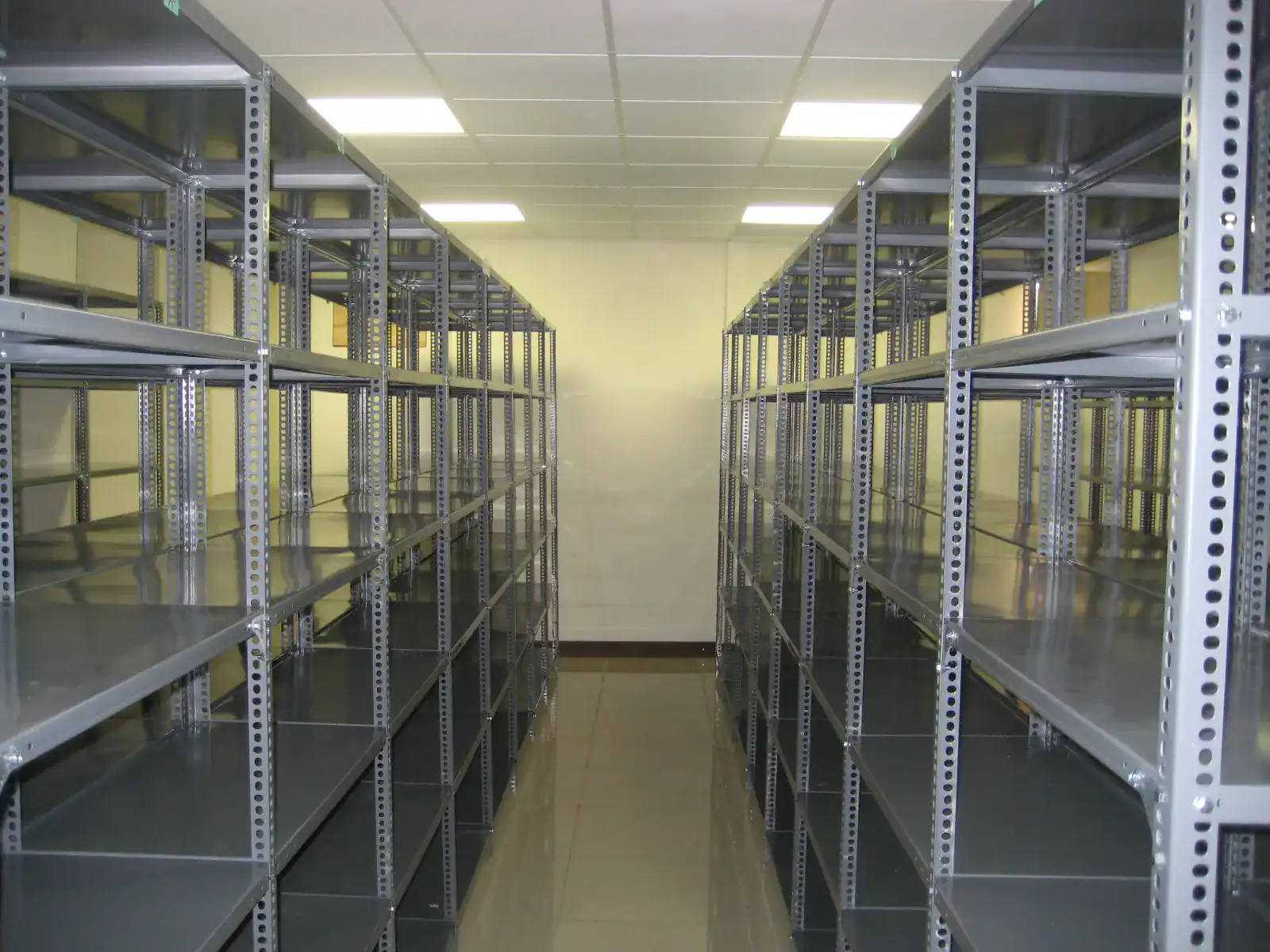
Adjustable shelf heights allow for customizable layouts to suit various storage needs.
Requires screws for assembly, providing enhanced structural integrity compared to boltless rivet shelving, ensuring secure storage for light loads.
It offers an affordable solution for short-term or interim storage, making it budget-friendly for small businesses or homeowners.
Designed for manual handling, it requires no heavy machinery and is suitable for environments where hand trucks or direct access are used.
The slotted design enables easy reconfiguration, allowing users to adapt the shelving to changing storage requirements or space constraints.
It is made from sturdy galvanized steel, ensuring durability for repeated use while remaining lightweight for easy handling.
This is ideal for scenarios that require frequent manual access to lightweight items. It is best used for temporary storage needs, such as office relocations, seasonal inventory management, and home organization projects.
| Beam Length (mm) | Frame Heights (mm) | Frame Depth (mm) |
|---|---|---|
| 1372 | 2438 | 838 |
| 2591 | 3048 | 914 |
| 2743 | 3658 | 1067 |
| 3048 | 4267 | 1219 |
As your warehouse storage solutions manufacturer In China, we’re committed to developing bespoke slotted angle shelving systems according to your needs. Our robust customization options open the door for vast modifications to existing products, enhancing their features and making them more marketable to your customers. Moreover, our designers can provide professional recommendations based on expressed demands and industry trends.

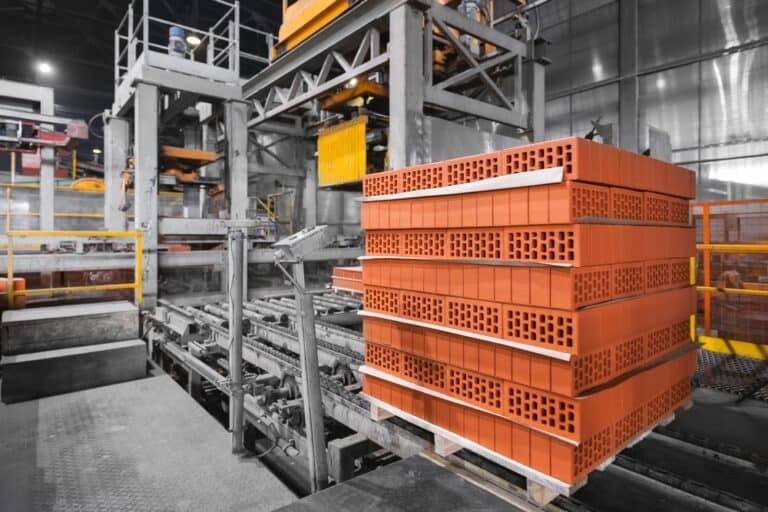



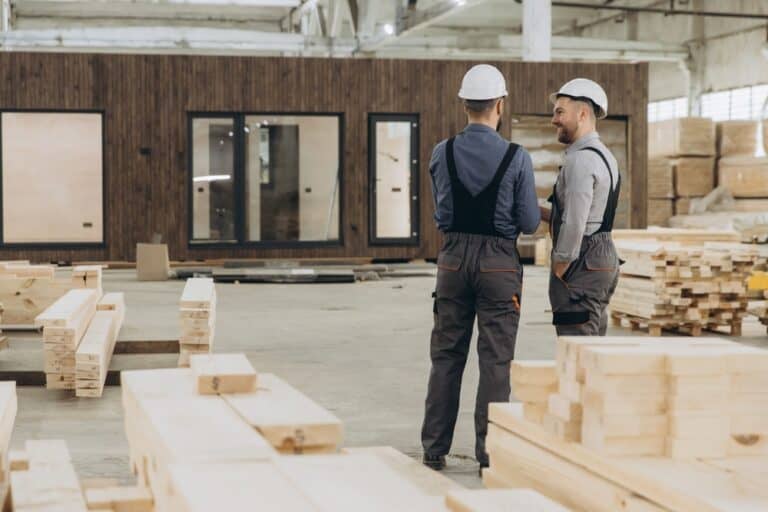


Manufacturing slotted angle shelving solutions since 1990 makes us a reliable partner towards success.
Utilizing the latest laser cutters, steel rollers, punchers, and other equipment for faster and more efficient production.
Our slotted angle shelving meets the requirements per ANSI MH16.1-2012(R2019) and BS EN 15512:2020+A102022.
Regular inspections and meticulous testing guarantee the optimal and long-term performance of our storage solutions.
Work with 10-year veteran designers and engineers who deeply understand your product needs.
Get constant assistance from our support specialist, with prompt responses to concerns within 24 hours.
Slotted angle shelving is a fundamentally flexible and economical storage system constructed from pre-punched, slotted steel angle irons that are connected using nuts, bolts, and braces. Unlike pre-configured systems, it operates like a storage construction kit, allowing you to build shelves, racks, workbenches, or enclosures to any custom dimension within the material limits.
The system is based on a simple, modular principle: Standard-length steel angles (e.g., 1”x1” or 2”x2”) are uniformly slotted. Using bolts, nuts, and connecting plates, these angles are assembled into uprights, beams, and braces to form a rigid frame. Shelf decks (particle board, wire mesh) are then added. This bolt-together design allows for precise tailoring to fit irregular spaces and specific load requirements.
Its core value lies in its unrestricted adaptability:
1) Ultimate Customizability: Can be built to any width, depth, or height, fitting into odd corners, around obstacles, or for unique item sizes.
2) Very Low Cost: Typically offers the lowest material cost per unit of any steel storage system.
3) DIY-Friendly & Reconfigurable: With basic tools, it can be easily assembled, modified, or completely disassembled for reuse in a new layout.
It is the ideal solution for non-standard, budget-conscious, or frequently changing storage needs, including: Creating workbenches and shop furniture, building enclosures for equipment or cages, storage in irregular spaces (e.g., under stairs, in angled rooms), light industrial storage where standard sizes don’t fit, and as a versatile material for prototyping storage layouts before investing in permanent systems.
Load capacity and durability are design-dependent. Capacity is determined by angle iron thickness, bolt gauge, and frame bracing. Well-designed systems can support 150-400 kg per shelf. For harsh environments, hot-dip galvanized or powder-coated angles provide excellent corrosion resistance, making them suitable for garages, warehouses, or damp conditions.
It occupies the opposite end of the “convenience vs. control” spectrum. Prefabricated shelving (boltless/rivet) offers speed, consistency, and optimized components for standard applications. Slotted angle shelving trades that convenience for complete dimensional control and lower cost, serving as the go-to solution when standard sizes fail or budget is the primary driver. It is the raw material for storage construction.
Success requires a shift from “selecting” to “designing and building”:
Design & Planning: This is the most critical step. Precisely measure your space and items. Sketch the frame design, specifying all dimensions. Calculate the required lengths of angle iron and quantities of bolts, nuts, and braces. Planning kits or CAD software can help.
Material Selection & Procurement: Choose the angle iron profile (size and gauge) based on load needs. Select galvanized or painted finish. Purchase all components, including shelf decking material.
Assembly Process: You will need basic hand tools: wrenches, socket sets, a hacksaw or angle grinder (for cutting), a drill, and a measuring tape. Assembly involves cutting angles to length, bolting the frame together square and level, and adding cross-bracing for stability.
Safety & Best Practices: Always use safety glasses when cutting or drilling. Ensure the structure is square and level during assembly. Do not skip cross-bracing—it is essential for preventing racking and collapse. Securely anchor tall or heavily loaded units to the wall or floor.
Implementation Tip: Consider starting with a small, simple project (like a single workbench) to familiarize yourself with the system before undertaking a large storage wall.