
Push back pallet racking systems offer better storage density, as users can store up to six pallets deep per aisle. The addition of rollers or shuttles on this system allows the pallets to easily move along the racks. It also elevates the safety factor of these racks, making them ideal for fragile goods.
As your trusted warehouse storage system manufacturer, iWarehousing designs and produces push back pallet racking setups with exceptional performance. Our push back pallet racking systems go through extensive quality control and testing steps, making sure they meet global standards. Alongside our superior manufacturing capabilities, we also provide an assortment of one-stop service to streamline your sourcing experience.
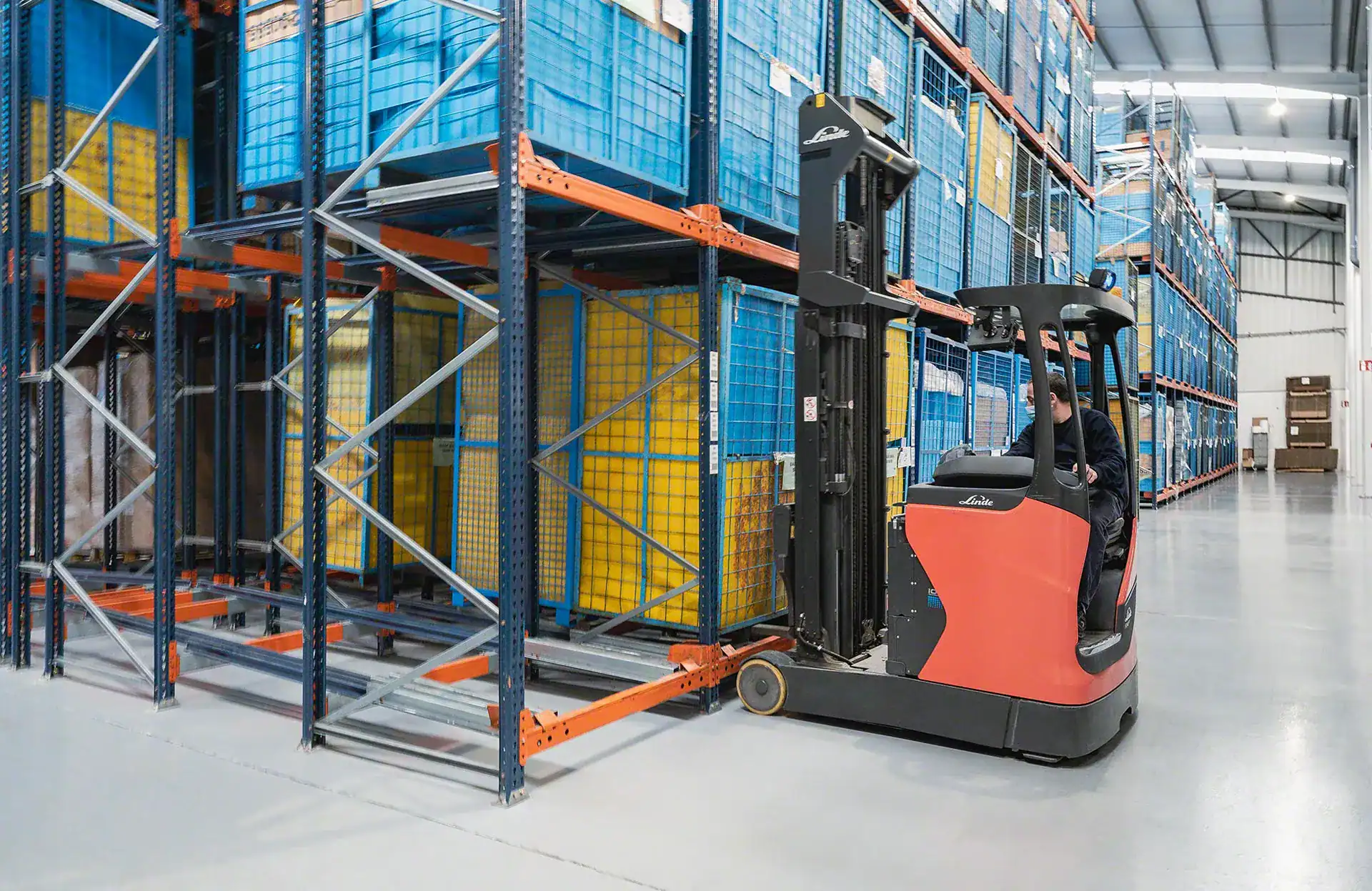
Adjustable cart widths accommodate a variety of pallet sizes, from Euro to industrial standards, without reconfiguration.
Set lanes for last-in-first-out (LIFO) to align with inventory rotation policies.
Works with conventional forklifts—no specialized equipment needed, reducing fleet investment costs.
Stores multi pallets deep on inclined rails, significantly increasing capacity versus selective racks.
The gravity-roll design and cushioned cart stops prevent sudden impacts and protect sensitive products.
Forklifts only engage the front pallet, and rear loads auto-retrieve. This minimizes aisle congestion and operator fatigue.
Optimize storage for medium-turnover goods of mixed sizes that require careful handling or flexible access rules.
| Beam Length (mm) | Frame Heights (mm) | Frame Depth (mm) |
|---|---|---|
| 1372 | 2438 | 838 |
| 2591 | 3048 | 914 |
| 2743 | 3658 | 1067 |
| 3048 | 4267 | 1219 |
To help make the storage racks more suitable for your target market, we offer a full range of customization done with keen attention to detail. This includes modifying the storage rack system’s design and layout, changing the hole pattern and beam design, and dictating the surface coating it’s finished in. We can also provide professional recommendations to further enhance the final output.




With more than three decades in the industry, we’re well-versed in what various markets need.
All storage racks meet US ANSI MH16.1- 2012 (R2019) and EU BS EN 15512:2020+A102022 standards, expanding market reach.
We keep prices very competitive to ensure you can maximize your budget while increasing potential profit.
You’ll work with designers and engineers with more than 10 years of industry experience.
We implement strict quality benchmarks throughout the production process and a final set of tests at the end.
Our customer support specialists are always available to address your concerns within 24 hours.
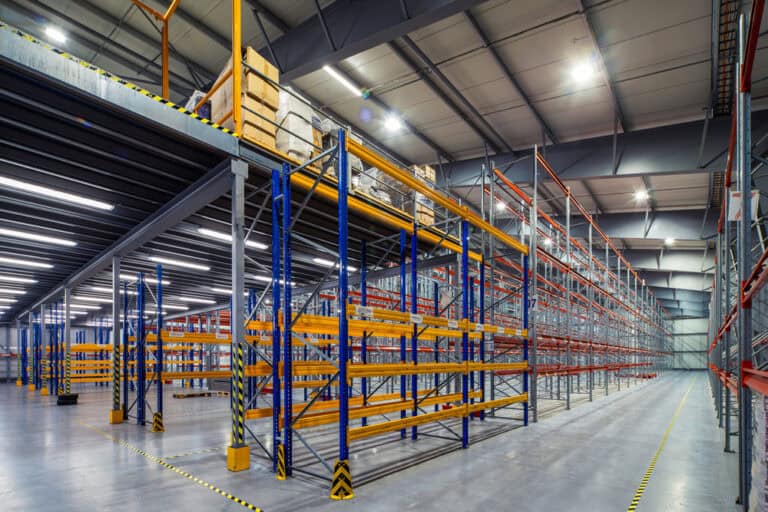
Push back pallet racking is a high-density, dynamic storage system that operates on a Last-In-First-Out (LIFO) basis. It features nested carts or carriers that ride on inclined rails within each lane, allowing newly loaded pallets to gently “push back” previously stored ones.
Each storage lane consists of a series of inclined rails with independently moving carts. When a forklift loads a new pallet onto the front cart, the force of the pallet pushes the entire row of carts (and their pallets) one position backward. During retrieval, the front pallet is removed, and the remaining carts automatically slide forward to the access face, ready for the next pick.
It delivers an optimal balance:
1) High Density: Stores typically 2-6 pallets deep, significantly reducing aisle space versus selective racking.
2) Superior Accessibility & Speed vs. Drive-In: Offers direct, front-facing access to every lane, enabling faster loading/unloading than drive-in systems.
3) Operational Simplicity: Utilizes standard forklifts without in-rack travel, reducing operator skill requirements and improving safety.
It is designed for lane-dedicated storage. Each lane is most efficient when dedicated to multiple pallets of a single, homogeneous SKU. Storing mixed SKUs in one lane is possible but complicates inventory tracking and can lead to accessibility issues, making it less ideal for highly varied product mixes per lane.
While robust, jamming can occur due to improperly loaded, overweight, or damaged pallets. Risk is minimized by:
1) Using High-Quality Pallets: Strict adherence to specified size and condition.
2) Professional Installation & Alignment: Ensuring perfectly level and parallel rails.
3) Operator Training: Instructing drivers to place pallets evenly and centered on the carts.
4) Preventative Maintenance: Regular inspections of carts, wheels, and rails.
The core difference is inventory flow and mechanism. Push back is LIFO-based, using nested carts, ideal for non-date-sensitive, high-volume goods. Pallet flow is FIFO-based, using gravity rollers, designed for perishable or date-rotated goods. Push back offers greater depth flexibility per lane compared to most flow systems.
Push back racking provides a more efficient and user-friendly alternative to traditional drive-in. It eliminates the need for forklifts to enter the rack structure, drastically improving operator safety, speed of operation, and reducing damage potential. While drive-in can achieve greater absolute depth, push back offers a better balance of density, accessibility, and operational cost.
Standard configurations range from 2 to 6 pallets deep per lane. The optimal depth is determined by balancing desired storage density avec product turnover rate and available warehouse space. Deeper lanes increase density but slightly increase retrieval time for the backmost pallet.
No, it is a key advantage. The system is fully compatible with standard counterbalance or reach forklifts. All loading and unloading are performed from the safety of the main aisle at the lane face, requiring no specialized equipment or complex maneuvers.
It has straightforward but critical spatial requirements:
1) Aisle Width: Must accommodate the forklift’s turning radius (typically 11-13 feet for a sit-down truck).
2) Ceiling Height: Must account for the rack height plus the inclined elevation of the rear carts. A professional site survey is essential to confirm feasibility and optimize layout.
Ask these key questions:
Inventory Strategy: Is my storage need for high-volume lanes of the same SKU, and is LIFO inventory rotation acceptable?
Density vs. Access Goal: Do I need significantly more density than selective racking but with much faster access than drive-in racking?
Operations: Do I want to maintain the use of standard forklifts and simplify operator tasks while enhancing safety?
Pallet Discipline: Can my operation ensure the use of uniform, high-integrity pallets to ensure system reliability?
If the answers align, a detailed layout design and cost-benefit analysis from a racking specialist will provide the final validation and implementation roadmap.