
Drive-in pallet racking systems are the ideal storage management solution for warehouses that handle large volumes of single-SKU products. Its vertical-focused design takes advantage of the warehouse’s height for maximum vertical capacity.
iWarehousing designs, manufactures, and assembles drive-in pallet racking systems for the global market. Using top-tier Q235B steel as the main material, our drive-in pallet racks have high load-bearing capabilities and a fully modular structure. However you want to set it up, our drive-in pallet racks can fit in perfectly.
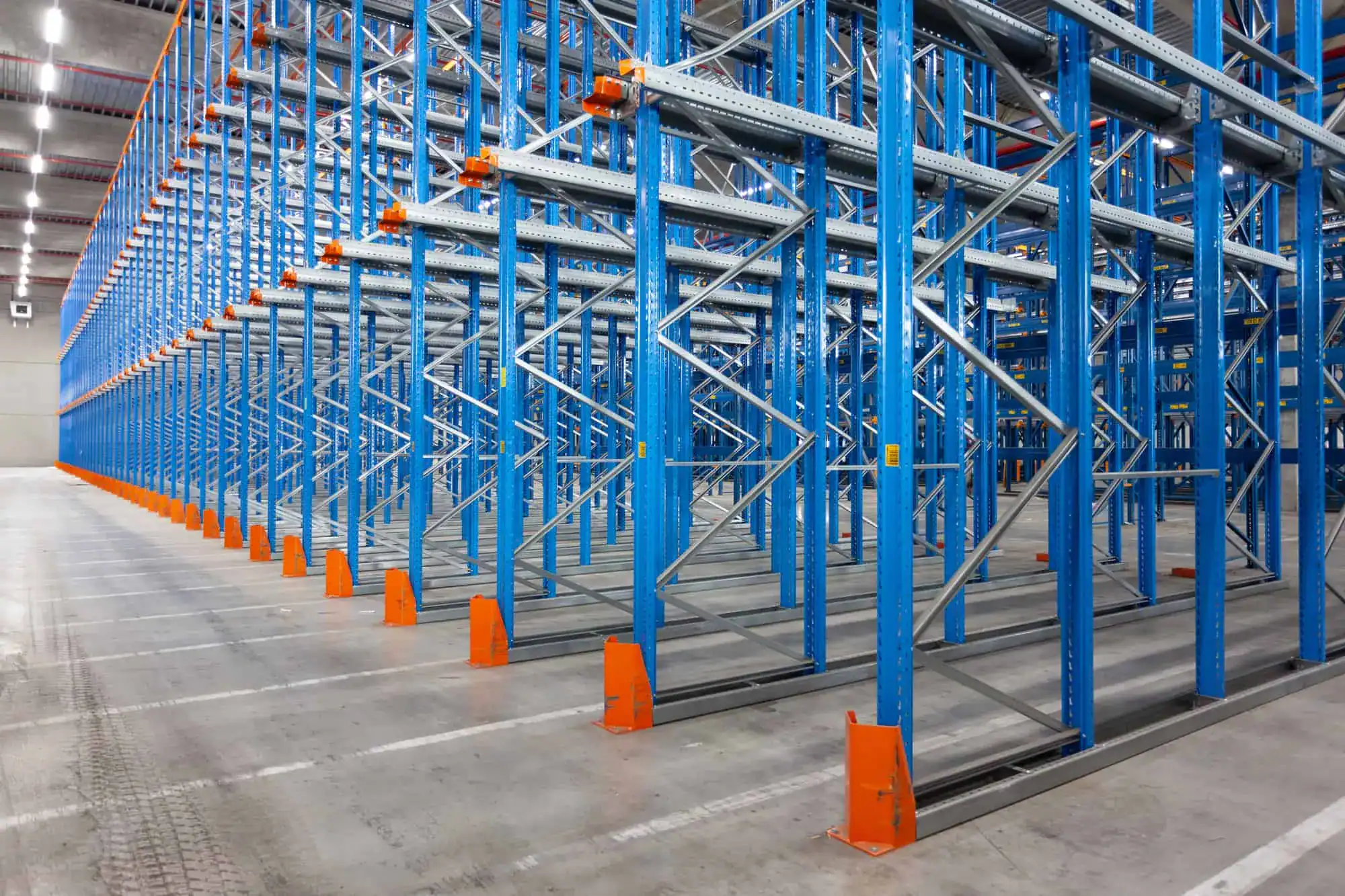
Stores pallets deep in single lanes, increasing storage density by 75% versus selective systems.
Q235 & Q235B steel rails resist freezer brittleness; compact layout cuts energy use in cold storage.
Steel guide rails prevent forklift damage to uprights; reinforced baseplates anchor racks securely.
Coated Q235B components combat corrosion; boltless connections allow rapid lane reconfiguration.
Reduces warehouse floor space needs, lowering rental costs in high-value locations.
Designed for homogeneous goods with a small number of SKUs, FIFO, or FILO access, ideal for seasonal or bulk stock rotation.
It is ideal for maximizing the storage of homogeneous goods with flexible turnover while cutting operational costs.
| Beam Length (mm) | Frame Heights (mm) | Frame Depth (mm) |
|---|---|---|
| 1372 | 2438 | 838 |
| 2591 | 3048 | 914 |
| 2743 | 3658 | 1067 |
| 3048 | 4267 | 1219 |
Customization not only results in bespoke solutions but also ensures that the end product ideally fits the needs of a business or industry. iWarehousing offers a range of customization options that allow you to realize creative ideas while improving the performance of the drive-in pallet racking. Alongside these modification features, our drive-in pallet racks can be fully adjusted during installation to suit what a certain warehouse requires.

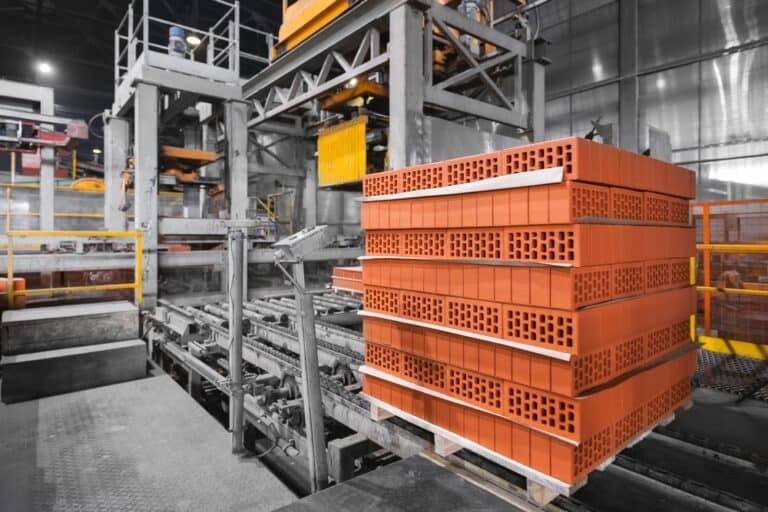
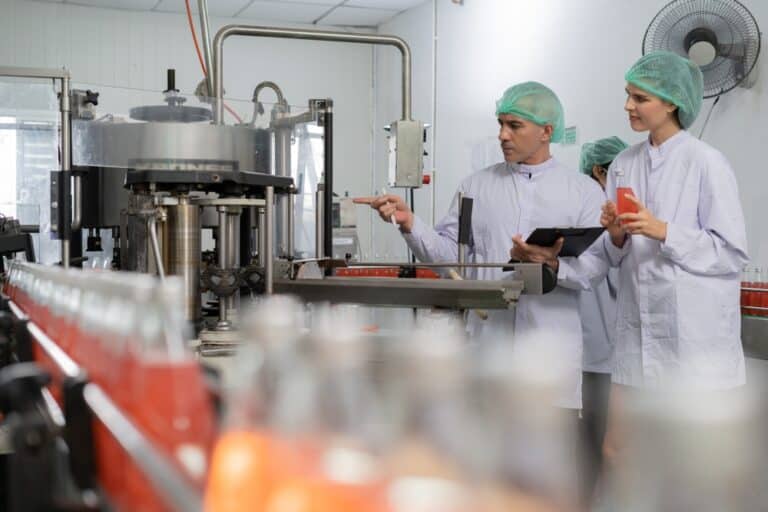

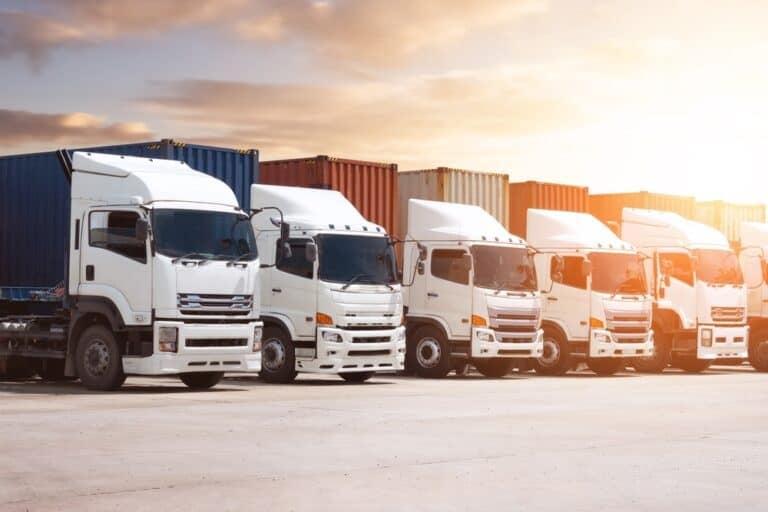
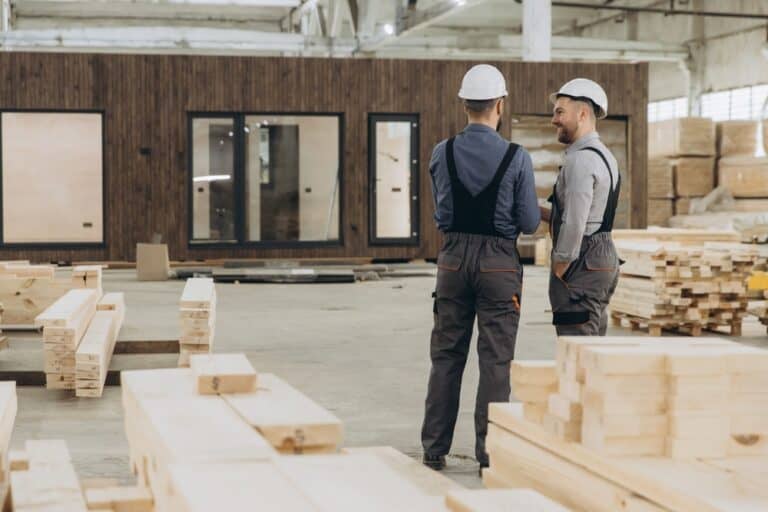


With over three decades of experience, we know what your industry needs and deliver exceptional results.
Constant improvement in our workshops and using the latest machinery ensures faster and higher-quality output.
Thanks to our expertise and streamlined production, we complete your storage racks within 20-25 days.
Seasoned designers and engineers leverage their 10+ industry experience to provide the best service in the market.
All inquiries are responded to within 24 hours, making sure you get comprehensive answers to your concerns.
iWarehousing prides itself on material honesty, where all measurements and dimensions are on point at all times.
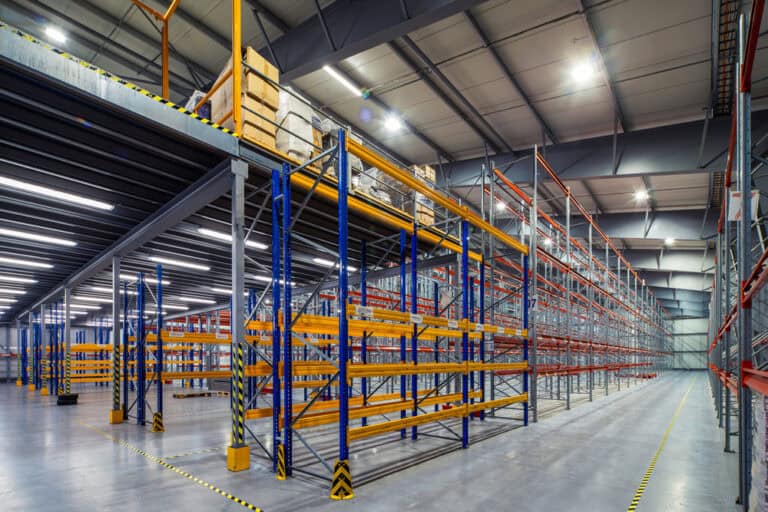
Drive-in pallet racking is a high-density storage system where forklifts physically drive into the rack structure itself to store and retrieve pallets. It eliminates dedicated aisles for each rack row, dramatically increasing storage density in a given warehouse footprint.
The system consists of continuous vertical rack frames con guide rails or runways installed at each storage level. Forklifts enter the designated lane, place a pallet onto the rails, and exit. Retrieval follows the reverse process. It typically operates on a Last-In, First-Out (LIFO) basis, as the most recently stored pallet blocks access to those behind it.
Its primary advantage is exceptional space utilization. It maximizes storage density and cube utilization by minimizing aisle space, making it ideal for high-volume storage of homogeneous products with limited SKU variety.
This system is specifically designed for bulk storage where selective access is not required. It is best suited for low-SKU-count inventory with a long shelf life, and where FIFO (First-In-First-Out) management is not critical. For FIFO requirements, drive-through racking (which allows access from both ends) is a related alternative.
Safety is paramount. While the enclosed design presents unique challenges, a properly designed and installed system with guide rails, wheel guides, and protective column guards enhances safety. However, it absolutely requires well-trained, certified, and attentive forklift operators to navigate the lanes safely and prevent accidents.
Consistency is critical. For safe and efficient operation, using uniform, high-quality pallets of identical dimensions and load capacity is strongly recommended. Mixing pallet sizes can cause jams, instability, and damage to the racking or forklift.
Drive-in racking offers significantly higher density than selective or even double-deep racking, but with reduced accessibility. Compared to push-back racking (which also offers high density but with LIFO access from a single aisle), drive-in systems can achieve greater depth. It is a classic choice for deep-lane, bulk storage of the same product, balancing very high density with relatively straightforward system mechanics.
Configurations typically range from 3 to 10+ pallets deep, depending on structural design, forklift reach capabilities, and overall warehouse length. The optimal depth balances maximized density con acceptable retrieval times and operator safety. A professional design analysis is required to determine the ideal depth for your operation.
In most cases, yes. Due to its size, weight, and structural impact, permitting is often required, especially for systems exceeding certain heights or located in seismic zones. Compliance with local building codes and fire regulations (e.g., sprinkler coverage within the rack) is mandatory and must be factored into the planning timeline.
Installation is more complex than standard selective racking. Precision is crucial for lane alignment and structural integrity. It must be installed by experienced professionals following engineered drawings to ensure safety and performance. Attempting non-professional installation is high-risk.
Ask these key questions:
Inventory Profile: Do I primarily store large quantities of a limited number of identical SKUs? Is my inventory turnover slow to medium, and is LIFO acceptable?
Space & Density Goal: Is maximizing storage density per square foot my top priority, even at the cost of immediate product accessibility?
Operations & Equipment: Do I have highly skilled forklift operators and is my fleet compatible (e.g., mast types, maneuverability)?
Commitment to Standards: Can I ensure the use of perfectly uniform pallets and commit to strict operational discipline?
If answers lean positive, proceed with a consultation from a qualified racking engineer to conduct a full feasibility study, including layout, cost analysis, and safety review.