
Single-sided cantilever racks fill the need for warehouses with limited space to store and manage products. Whether carrying lumber, wire reels, or other irregularly shaped products, the high load-bearing capacity of these racks ensures they’re securely held in place.
The simplistic design of our single-sided cantilever rack makes it extremely versatile and could fit a wide array of applications. And with strong, durable arms attached to the racks via multiple holes, they can be easily adjusted to carry products of any size.
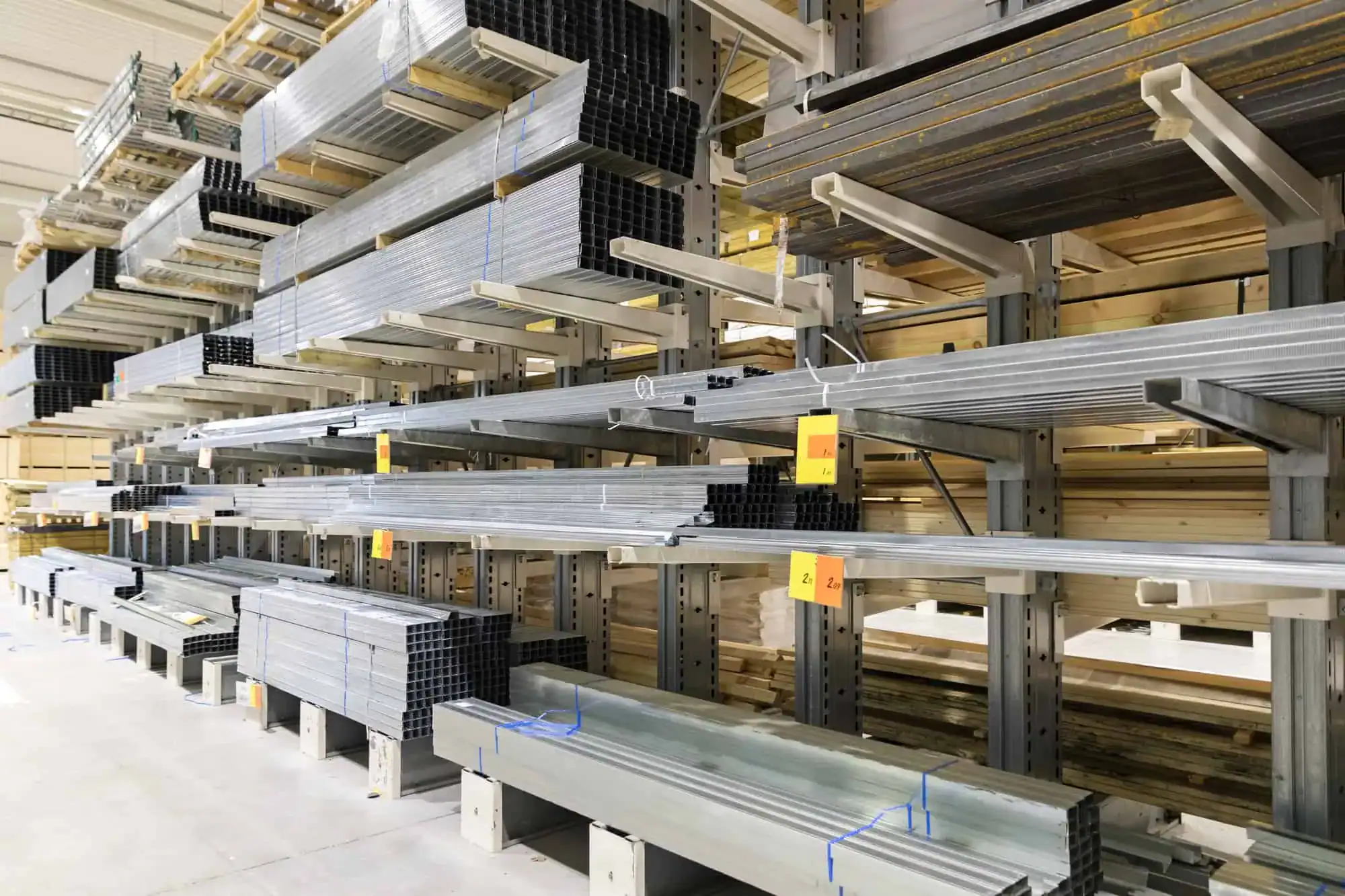
Frees up floor space by attaching to walls, making it ideal for small warehouses or perimeter zones.
Customizable arm spacing and heights adapt to mixed-length items like timber or profiles.
The Q235B steel arms can handle pipes, timber, or materials weighing up to 2,000 kg per tier.
Galvanized finish resists corrosion in lumber yards or coastal environments.
Ideal for industries handling long, bulky, or non-palletized goods:
| Beam Length (mm) | Frame Heights (mm) | Frame Depth (mm) |
|---|---|---|
| 1372 | 2438 | 838 |
| 2591 | 3048 | 914 |
| 2743 | 3658 | 1067 |
| 3048 | 4267 | 1219 |
iWarehousing various cutting-edge equipment to implement modifications to the single-sided cantilever racks. From creating a unique design layout or opting for a galvanized finish to improve corrosion resistance, our experts can accommodate any customization request. Simply let our team know what you need, and we can provide recommendations to improve the outcome.






Rely on over 30 years of experience to deliver cantilever rack solutions down to the last detail.
Veteran designers complete custom designs within three days and send them to you for approval.
We work closely with you in both order completion and setting payment terms.
Receive comprehensive answers to all concerns and inquiries from industry experts within 24 hours.
Along with a detailed material report for all incoming materials, we also stay true to all measurements.
We practice strict compliance with ANSI MH16.1-2012(R2019) and BS EN 15512:2020+A102022.
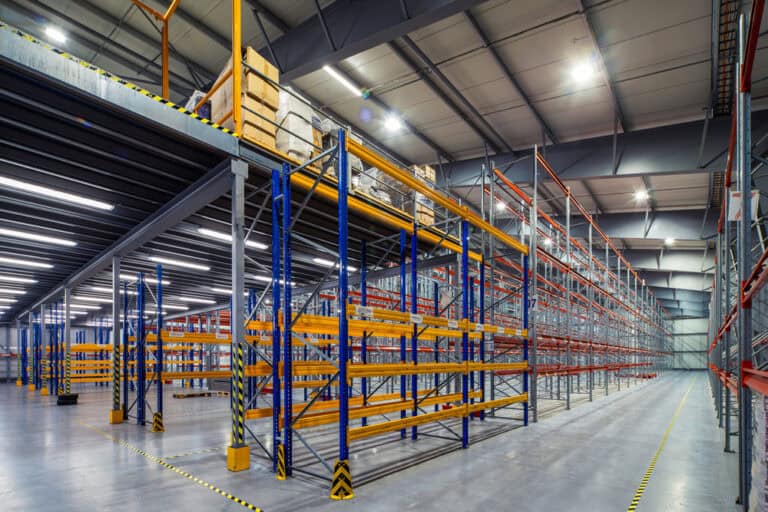
Single-sided cantilever racking is a space-optimizing storage system where horizontal arms extend from vertical columns in only one direction. It is primarily designed to be placed against a wall, partition, or as a room divider, transforming unused perimeter space into highly accessible, organized storage for long items.
The system utilizes a row of upright columns anchored to the floor, with adjustable arms attached on the outward-facing side. This creates a continuous storage face along a wall or boundary. Long materials are placed directly onto the arms, parallel to the wall, allowing for their full length to be presented and accessed from the aisle side without any front-column obstruction.
Its primary benefit is the transformation of boundary space into productive storage:
1) Maximizes Perimeter Utilization: Converts non-productive wall space into high-density storage.
2) Maintains Clear Aisles: Keeps walkways and floor space completely open and unobstructed on the stored-item side.
3) Ideal for Boundary Storage: Perfect for storing long, bulky items (pipes, lumber, trim) that are infrequently accessed in bulk but need to be kept organized and available.
It is ubiquitous in any facility needing organized long-item storage against walls: Woodworking & Carpentry Shops, Metal Fabrication & Service Centers, Building Material & Plumbing Suppliers, Retail Backrooms & Hardware Stores, and any Warehouse seeking to optimize its perimeter storage layout.
Height is primarily constrained by building ceiling clearance and safety/operational practicality. While systems can be engineered to significant heights (8+ meters), typical applications range from 3 to 6 meters. The key consideration is the safe reach of the material handling equipment (e.g., a person with a hook, a small ladder, or a light-duty forklift) used in the aisle.
They serve complementary roles in a warehouse master plan: Single-sided racking is the optimal solution for perimeter storage along walls, maximizing the use of otherwise dead space. Double-sided racking is the optimal solution for high-density, central storage blocks within the open floor. Choosing between them is a matter of space planning strategy, not just product choice.
This depends entirely on the initial system’s structural design. Some modular systems are engineered with columns and bases that can support arms on both sides, allowing for future conversion with additional arms and reinforcement. However, many systems are designed and rated specifically for single-sided loading. Attempting to convert a non-qualified system can compromise stability. Always clarify this requirement at the time of purchase and obtain engineering confirmation.
Follow this targeted implementation guide:
Wall & Space Audit: Measure the available wall length and clear ceiling height. Identify obstructions like doors, electrical panels, or sprinklers.
Load & Activity Planning: Define the types, lengths, and weights of items to store. Determine the frequency of access to plan arm spacing and aisle width accordingly.
Layout Design: Decide on arm lengths (to fully support items) and vertical spacing (to maximize capacity without wasting space). Ensure the aisle in front is wide enough for safe maneuvering with the longest item.
Installation Focus: For systems against walls, ensure there is adequate clearance between the back of the column and the wall for installation and potential building irregularities. Proper floor anchoring is critical to resist the forward tipping force exerted by loads on the arms.
Operational Rules: Train staff to load items evenly across the arms of a column and to never exceed the posted arm or column capacity, as the single-sided configuration creates a significant lever effect on the uprights.